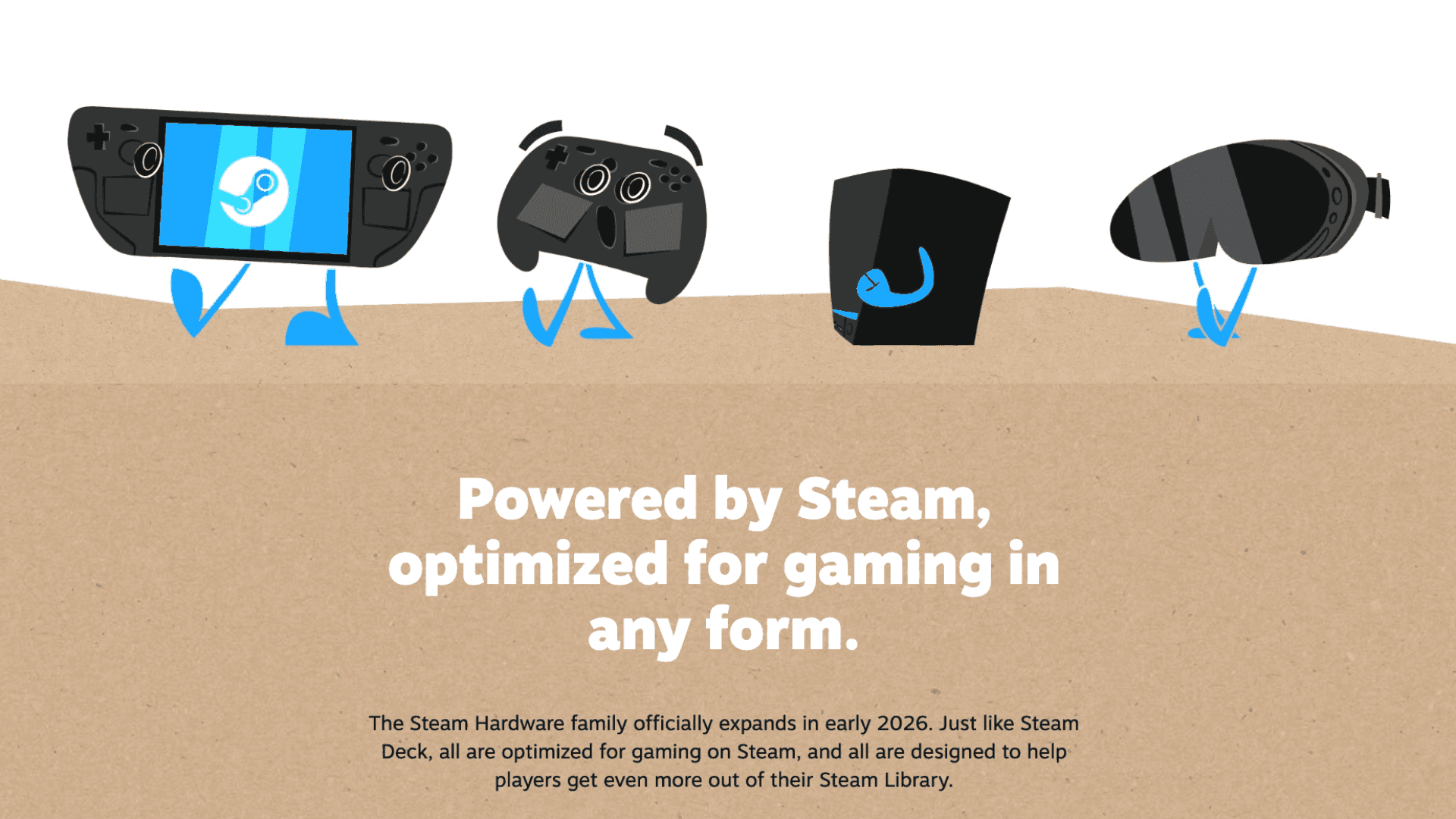

Valve has announced a new lineup of hardware this week, including a refreshed Steam controller, the Steam Frame VR headset, and a second-generation Steam Machine. The new Steam Machine, initially launched in 2013, is scheduled for release in early 2026, though pricing details have not been confirmed. The company’s latest announcements reflect a continued effort to provide console-like PC gaming experiences through SteamOS.
The Steam controller has been updated to refine its design and input options, while the Steam Frame is a compact VR headset that operates as its own PC but also supports streaming over WiFi from other devices. Valve emphasizes that the Steam Frame is suitable for both VR and traditional gaming, recognizing VR’s slower adoption compared to previous expectations.
The Potential of Steam Machine 2.0
The second-generation Steam Machine may have the most significant impact among Valve’s recent hardware announcements. Unlike the original Steam Machines, which faced limitations due to incomplete Linux support, the new model benefits from significant software improvements. Proton, the open-source tool that enables Windows games to run on Linux, now allows the majority of Steam games to work on SteamOS, broadening the device’s potential audience.
Steam Deck has also prepared both developers and players for a console-style Steam experience. By encouraging consistent controller support and compatibility across a wide catalog of games, the Steam Deck has helped create an environment in which a PC-based console like the Steam Machine can succeed. This approach allows Valve to offer a device that delivers a familiar Steam library experience on a TV without requiring players to repurchase games.
Hardware Considerations and Market Strategy
Building a Steam Machine-style PC is simpler than designing a handheld device like the Steam Deck, which has required more engineering resources and innovation. SteamOS remains freely available to hardware partners, making it easier for manufacturers to create and support Steam Machine devices. Valve’s strategy differs from traditional console marketing, as the company relies on its existing Steam user base rather than paid promotions or wide retail distribution.
This approach positions the Steam Machine as an optional addition for PC gamers rather than a must-have console. Valve has reported between 170 and 200 million monthly active users on Steam, and the Steam Deck has contributed an estimated 5 to 7 million units to the ecosystem. The company expects that the Steam Machine could add an additional 7 to 10 million units over the next five years.
Remaining Challenges
Despite improvements, there are some limitations with the new Steam Machine. Anti-cheat systems at the kernel level are not yet compatible with SteamOS, preventing certain multiplayer titles, such as Battlefield 6, from functioning on the platform. Valve has expressed hope that the launch of the Steam Machine will encourage broader adoption of anti-cheat support among developers.
Valve’s hardware strategy remains focused on incremental ecosystem growth rather than aggressive competition with consoles like the PlayStation 5 or Xbox Series X. While these consoles aim for mass-market appeal and high sales figures, Valve appears content to gradually expand a Windows-independent Steam environment for players who want a PC-based console experience.
Conclusion
Valve’s second-generation Steam Machine represents a continuation of the company’s long-term efforts to develop a versatile, console-style gaming experience on SteamOS. Combined with the updated Steam controller and Steam Frame VR device, the new hardware lineup reinforces Valve’s focus on incremental growth and ecosystem integration rather than a high-stakes hardware push. For Steam users, the new Steam Machine offers an additional way to access their game libraries on a TV, supported by years of improvements in software compatibility and controller support.
Source: GameDiscoverCo
Frequently Asked Questions (FAQs)
When will the new Steam Machine be released?
The second-generation Steam Machine is scheduled for release in early 2026. Pricing has not yet been announced.
Will all Steam games work on Steam Machine 2.0?
Most Steam games should be compatible due to Proton, which enables Windows games to run on SteamOS. However, some multiplayer titles that rely on kernel-level anti-cheat may not be supported initially.
How does Steam Machine 2.0 differ from the Steam Deck?
The Steam Machine is a console-style PC designed for use with a TV, while the Steam Deck is a handheld device. The Steam Machine benefits from easier hardware design and full SteamOS compatibility across larger screen setups.
Does Valve plan to sell Steam Machines in retail stores?
Valve’s strategy focuses on online sales and ecosystem growth rather than wide retail distribution. There may be limited retail availability through certain partners, but mass retail placement is not a priority.
Can the Steam Frame be used for non-VR gaming?
Yes. The Steam Frame supports both VR and traditional PC gaming, either as a standalone device or through WiFi streaming from another PC.