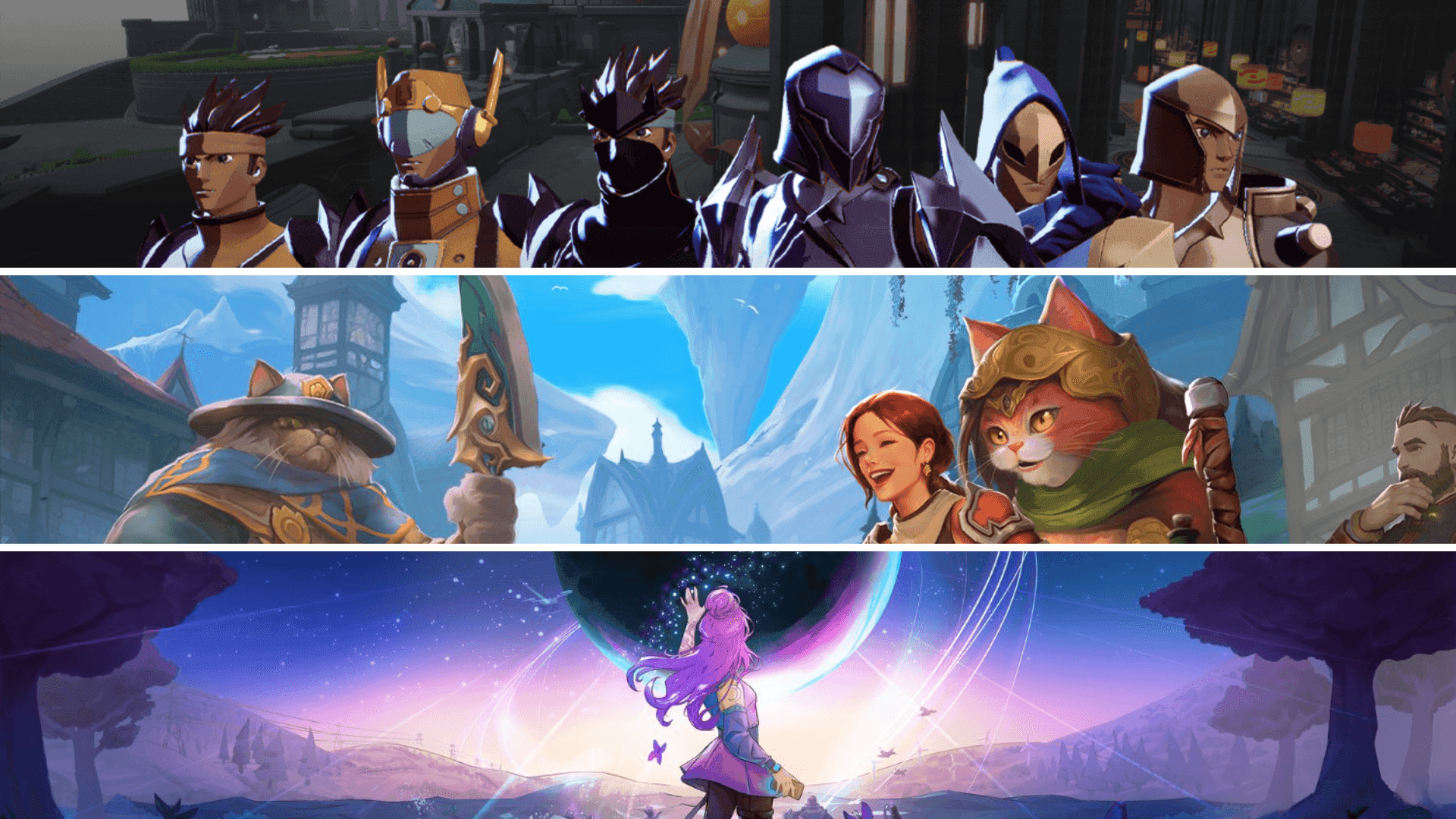
Open Loot has revealed Warcast, a new strategy game developed internally as the company’s second original title following Big Time. Designed around territory control, resource management, and long-term planning, Warcast marks a shift toward competitive, systems-driven gameplay within Open Loot’s growing web3 ecosystem.
The project is developed under Open Loot’s leadership, creative direction, and production oversight. Johnson Yeh, former CEO for China, Japan, and Southeast Asia at Riot Games, is collaborating with the team across all areas of development. His experience in large-scale competitive titles is expected to influence Warcast’s approach to structure, balance, and long-term engagement.
About Warcast
Warcast is a strategy game where players compete over land, infrastructure, and limited resources on a shared world map. Instead of focusing on reflex-based combat or fast sessions, the game emphasizes calculated expansion, alliance formation, and long-term decision-making.
Players secure territory, develop infrastructure, and coordinate with others to maintain control over valuable resources. Every move contributes to broader map dynamics, reinforcing the idea that outcomes are shaped by preparation and cooperation rather than moment-to-moment reactions. The structure encourages players to think several steps ahead while responding to shifting conditions created by other participants.
Warcast is also designed for asynchronous play. Players are not required to remain online constantly to make progress. Instead, they can log in throughout the day to make strategic decisions, adjust plans, and coordinate with allies. This format supports both browser and mobile access, lowering the barrier for consistent participation without demanding continuous play sessions.
Drawing From 4X Strategy Design
Warcast takes inspiration from 4X strategy principles, which traditionally center on expansion, resource control, and strategic trade-offs. In this framework, territory is limited and resources are finite, forcing players to weigh risk against long-term gains.
These mechanics translate naturally into a web3-enabled structure where player-driven systems and economic dynamics depend on planning and coordination. By focusing on scarcity and controlled growth, the game aims to create structured competition where alliances and infrastructure matter as much as territorial conquest.
The emphasis on deliberate strategy over short-term action sets Warcast apart from more reactive competitive formats. It is positioned as a long-term strategy experience where cooperation, negotiation, and timing influence progression across the shared world.
Built by Open Loot
Warcast is developed by Open Loot, the team behind Big Time. As the company’s second internally led title, it represents a deliberate expansion of its original IP portfolio. The game is being built under direct creative and production oversight, ensuring alignment with Open Loot’s broader platform strategy.
Johnson Yeh’s involvement spans development planning and competitive systems design. His background in managing regional operations for Riot Games across China, Japan, and Southeast Asia adds experience in scaling competitive ecosystems and maintaining live service stability.
The company describes Warcast as part of its gameplay-first approach, prioritizing balance, system validation, and player feedback before introducing monetization elements.
Playtest Schedule
Warcast will launch through a phased playtest approach, beginning with a limited invite-only test scheduled for March 2 to March 16, 2026. This stage will involve a selected group of Open Loot users chosen through an application process. The focus will be on testing core gameplay systems, economic simulations, and technical stability.
An open playtest will follow at a later date, allowing a broader audience to access the game. This stage is intended to test scalability and long-term progression systems while continuing to refine gameplay based on feedback.
During both playtest phases, there will be no monetization. Nothing will be available for purchase, and the development team has stated that the goal is to validate mechanics and gather structured input from participants. Some NFTs may be distributed during testing, but these assets will be non-tradable for the duration of the playtest period. Any restrictions may evolve as development continues.
All progress made during testing will reset prior to the full launch.
How to Join the Playtest
Applications for the invite-only playtest are currently open through Open Loot. Interested players can submit their information through the platform for a chance to participate in early testing.
Warcast represents Open Loot’s continued expansion into strategy-driven web3 gaming. With its focus on territory control, alliances, and structured competition, the title aims to establish a long-term strategic environment shaped by player coordination and deliberate decision-making.
Frequently Asked Questions (FAQs)
What is Warcast?
Warcast is a strategy game developed by Open Loot that focuses on territory control, resource management, alliances, and long-term planning within a shared world map.
Who is developing Warcast?
Warcast is developed internally by Open Loot, the team behind Big Time, with collaboration from Johnson Yeh, former CEO for China, Japan, and Southeast Asia at Riot Games.
When does the Warcast playtest start?
The invite-only playtest is scheduled for March 2 to March 16, 2026. An open playtest will follow at a later date, which has not yet been announced.
Will there be monetization during the playtest?
No. There will be no monetization during the playtest phases, and nothing will be available for purchase while testing is ongoing.
Will NFTs be included in Warcast?
Some NFTs may be distributed during testing. However, these NFTs will be non-tradable during the playtest period, and any restrictions may change as development continues.
Is Warcast a web3 game?
Yes. Warcast is designed as a web3-enabled strategy game, incorporating player-driven systems while focusing on structured, gameplay-first development.
Will progress carry over after the playtest?
No. All progress made during playtesting will reset before the full launch of the game.