
The Tokyo Games Foundation has released the whitepaper for Project U, signaling a major strategic shift away from Tokyo Beast. The new document outlines a web3 game centered on NFT racing, and a deflationary $TGT token economy. The whitepaper confirms that development on Tokyo Beast will not continue, as the studio pivots toward a new type of gameplay experience aimed at NFT collectors.
Tokyo Games Foundation Unveils Project U
After the studio’s recent announcement of a comeback, fans expected Tokyo Beast to return. Instead, the whitepaper makes it clear that Project U represents a fresh start. While Tokyo Beast is briefly referenced, the focus is now entirely on Project U, which moves away from strategic combat and breeding systems toward new gameplay. The shift is framed as a response to lessons learned from the shortcomings of Tokyo Beast and previous experiences in the GameFi space.
Game Mechanics and $TGT Token
The game will host multiple races daily, where players can wager $TGT on character outcomes. Rewards are split between successful bettors and the owners of the characters involved, encouraging a dual focus on collection and wagering. Race events are structured with rankings and grade levels, offering progression from entry-level open races to higher-tier competitive matches.
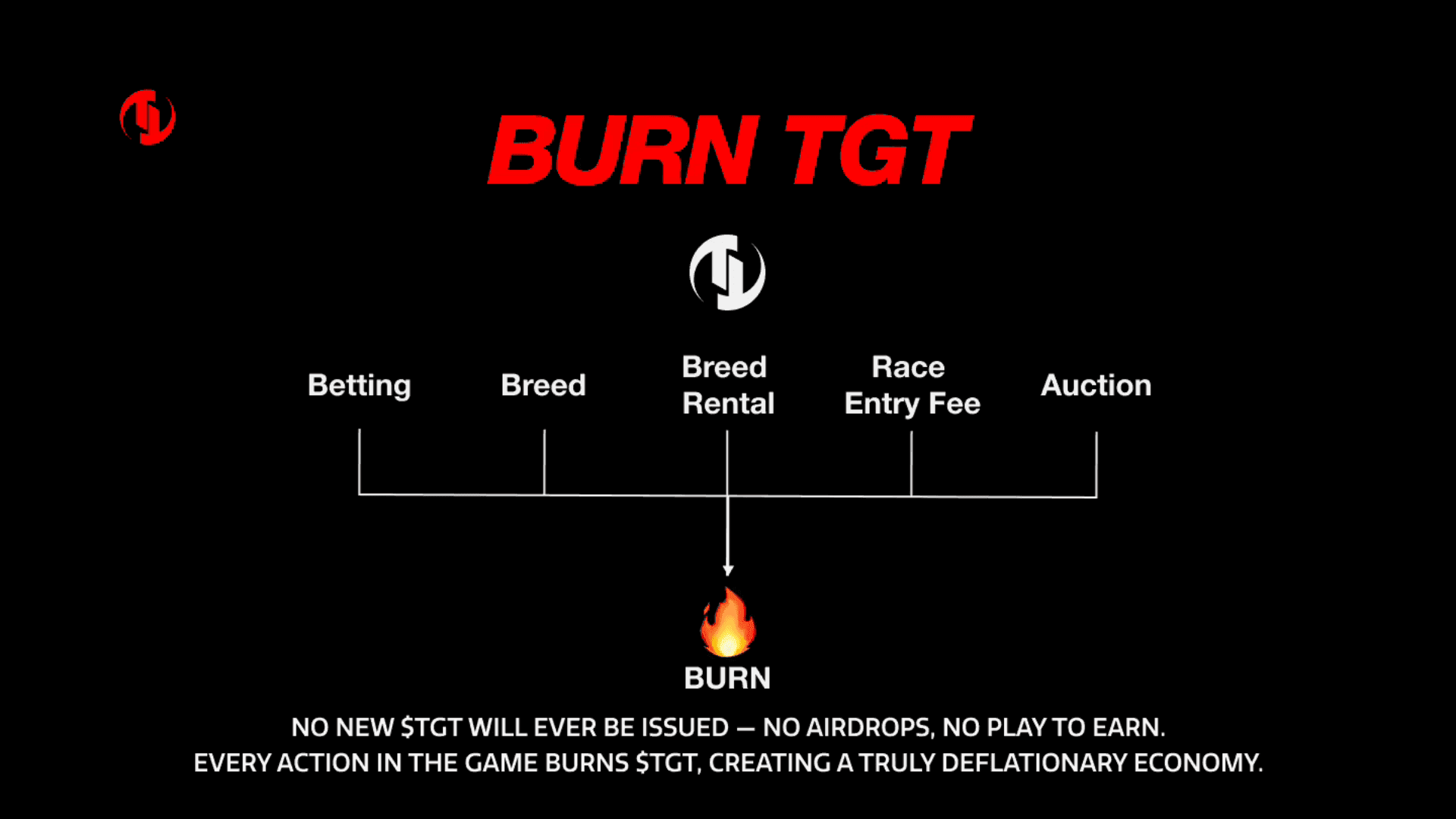
Players have the option to manually select races or use an automated system for entries, and each wager placed contributes to the burning of $TGT tokens, supporting the project’s deflationary economic model.
Strict No-Mint Policy for $TGT
Project U implements a strict no-mint policy for $TGT, with no new token issuance, airdrops, or traditional play-to-earn mechanics. Major in-game actions consume $TGT, including breeding, race entries, breeding rentals, and NFT auctions, creating a deflationary system that gradually reduces token supply.
NFT breeding is also tightly controlled. Characters can only breed twice, and new characters must wait before breeding again. Parents lose racing eligibility after breeding, and skills, traits, and visual appearances are partially inherited by offspring. This system is designed to prevent inflation in the NFT supply, a problem that has affected many past GameFi projects.
NTFs and Ownership Explained
Unlike many other web3 games, Project U does not support scholarship systems or delegated play. Only NFT owners can perform essential gameplay actions such as racing or training their characters. The game offers an alternative avenue for participation for non-owners, while breeding rentals are allowed under a system where 10% of the rental fee is burned. NFT characters are distributed exclusively through auctions and secondary markets, with all auction transactions conducted in $TGT and subsequently burned.
Reaction from the community has been mixed. Some web3 figures have raised concerns about the feasibility of building new mechanics and questioned whether the new IP is sufficient to support the project. Others have expressed cautious optimism, particularly in response to the deflationary token model. Social media discussions reflect both uncertainty and support, as fans and players await more concrete details about gameplay, platform compatibility, and visuals.
About Tokyo Beast and Next Steps
The pivot to Project U comes just months after the closure of Tokyo Beast, which launched in June 2025.Tokyo Beast generated significant initial engagement, with over 300,000 downloads in the first week and more than $1 million in revenue. However, high operational costs and unsustainable reward structures contributed to its shutdown by August 2025. Refunds were issued in USDC, but the project faced a temporary communication blackout before the announcement of Project U.
While the whitepaper provides a clear strategic direction, key details remain unknown. The release date, platform availability, and specifics about the promised “big IP” have not been disclosed. Information on character design, game style, and whether the title will be browser-based, mobile, or downloadable is also limited. Project U remains in a pre-release phase, with updates expected as development continues.
Frequently Asked Questions (FAQs)
What is Project U?
Project U is a new web3 game by Tokyo Games Foundation focused on NFT racing, and a deflationary $TGT token economy. It represents a strategic shift from the studio’s previous game, Tokyo Beast.
Will Tokyo Beast return?
No. The studio has confirmed that development on Tokyo Beast will not continue, with all resources directed toward Project U.
How are NFTs obtained in Project U?
New NFT characters are only available through auctions or secondary markets, with all payments in $TGT being permanently burned.
When will Project U be released?
The whitepaper does not provide a release date, platform information, or early access timeline. The project is currently in pre-release development.
Will Project U use existing IP?
The whitepaper mentions leveraging a “big IP” but does not disclose specific franchises or brands at this stage.