
For more than ten years, Five Nights at Freddy’s has haunted players and content creators alike, transforming from a small indie project into one of the most recognizable horror franchises in gaming. What began as a simple experiment by a solo developer became a cultural phenomenon that inspired a new generation of indie horror creators and gave rise to what fans now call “mascot horror.”
From a Cash Register to Cultural Icon
Before Five Nights at Freddy’s became a household name, creator Scott Cawthon was working as a cashier at Dollar General while developing small games on the side. After a series of failed releases, he shifted his focus to horror and drew inspiration from family entertainment restaurants like Chuck E. Cheese. The result was the first Five Nights at Freddy’s, set inside the fictional Freddy Fazbear’s Pizza.
The premise was simple: players took on the role of a night security guard watching over malfunctioning animatronics that came to life after midnight. Trapped in a single room with limited power, players could only survive by monitoring camera feeds and closing doors when the murderous mascots drew near. The limited mobility created a tense atmosphere that kept players constantly on edge, and when they failed, the jump scares were instant and unforgettable.
When the game launched in 2014, its short sessions and sudden scares made it perfect for YouTube. Popular creators like PewDiePie and Markiplier recorded their reactions, helping the game spread rapidly online. Within months, Five Nights at Freddy’s had sold millions of copies and established itself as one of the most successful indie games of the decade.
Expanding the Horror Universe
Cawthon wasted no time in building on that momentum. Multiple sequels arrived in quick succession, each adding new mechanics, characters, and lore. Over the years, the franchise evolved beyond its static office setting to include open environments, puzzles, and a deeper narrative connecting the entire series.
Today, Five Nights at Freddy’s extends far beyond gaming. It includes novels, official merchandise, a feature film (with a sequel on the way), and even a haunted attraction at Universal Studios. Behaviour Interactive, the studio behind Dead by Daylight, has called FNAF an “integral part” of modern horror culture for the way it reshaped expectations of what indie horror could achieve.
The Birth of Mascot Horror
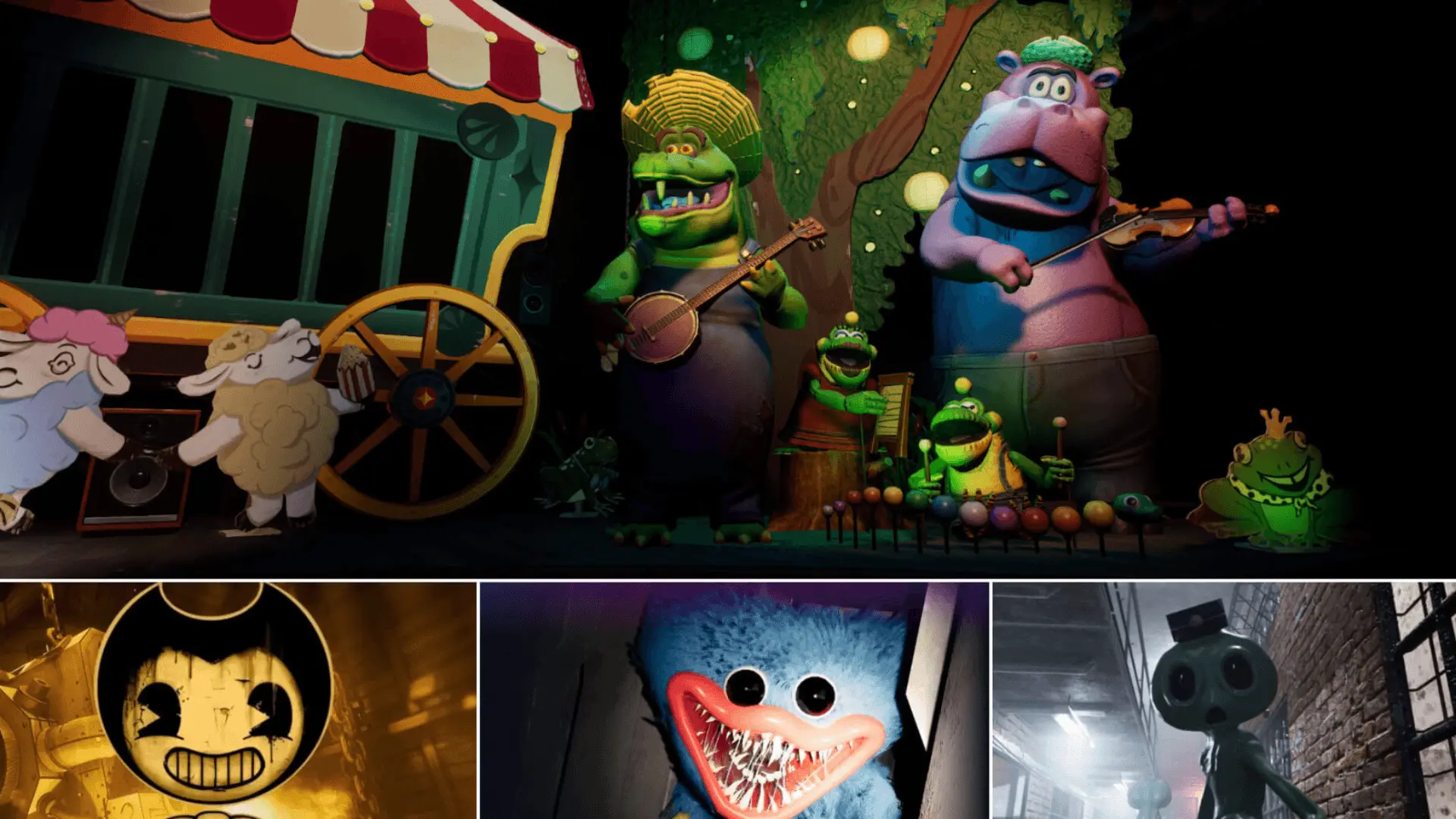
The success of Five Nights at Freddy’s paved the way for a new generation of indie horror titles that followed similar themes - combining childhood nostalgia with unsettling environments and unpredictable monsters. This new wave of “mascot horror” has become one of the most distinctive trends in modern gaming, producing several standout franchises.
Poppy Playtime
Mob Entertainment’s Poppy Playtime reimagines the haunted setting as an abandoned toy factory, where players must evade monstrous mascots like Huggy Wuggy - a cheerful-looking creature with an unnerving grin and rows of sharp teeth. The story unfolds through collectible VHS tapes, inviting fans to piece together the lore on their own.
Like FNAF, Poppy Playtime thrives on community engagement. Fans dissect its mysteries through fan theories and lore videos, fueling online discussions that keep the series in the public eye. The franchise has also expanded into physical merchandise, turning its characters into recognizable icons among younger audiences.
Garten of Banban
Developed by Euphoric Brothers, Garten of Banban takes the formula in a different direction. The series is set inside a deserted kindergarten filled with bizarre mascots and cryptic clues about missing children. Each sequel adds new layers to the facility’s underground world, introducing monstrous characters like Opila Bird and Banban himself.
The franchise’s short, episodic format and surreal art design have made it a favorite for streamers looking for quick, creepy experiences. Like FNAF, it thrives on the balance between curiosity and fear, using vibrant, childlike imagery to mask its darker undertones.
CASE: Animatronics
From Last Level and WALZ, CASE: Animatronics brings the FNAF formula into a more grounded setting. Players step into the shoes of a detective trapped in a police station after hours, hunted by rogue animatronic creatures. Surveillance cameras, hiding spots, and power management all play key roles in survival.
Its sequel, CASE 2: Animatronics Survival, expanded on the original with a multiplayer mode where players can take control of the animatronics themselves. The addition of online gameplay shows how flexible and enduring the mascot horror concept has become.
Bendy and the Ink Machine
Released in 2017, Bendy and the Ink Machine stands out for its striking 1930s cartoon aesthetic. Set in an abandoned animation studio, it blends first-person exploration with light puzzle-solving and combat. As players uncover the mystery behind the studio’s downfall, they encounter ink-soaked monsters and corrupted versions of classic cartoon characters.
The game’s success led to a full franchise including spin-offs, merchandise, and an upcoming film adaptation. The next installment, Bendy and the Ink Factory, is currently in development and expected to conclude the saga.
A Lasting Impact on Horror Gaming
A decade after its debut, Five Nights at Freddy’s remains a cornerstone of indie horror. Its blend of simplicity, mystery, and viral appeal proved that small-scale projects could achieve massive cultural impact. Developers continue to experiment with the formula, evolving it for new audiences and platforms.
Games like Poppy Playtime, Garten of Banban, CASE: Animatronics, and Bendy and the Ink Machine demonstrate how FNAF’s influence continues to shape the genre. They also highlight how digital communities - especially on platforms like YouTube and TikTok - have become vital spaces for indie horror to thrive.
All of these titles, along with the latest chapters in Five Nights at Freddy’s, are available on the Epic Games Store, offering plenty of ways for players to test their nerves this Halloween season.
Source: Giancarlo Valdes, Epic Games
Frequently Asked Questions (FAQs)
What made Five Nights at Freddy’s so popular?
Its simple yet nerve-wracking gameplay and jump scares made it ideal for reaction videos on YouTube, helping it go viral soon after release.
Who created Five Nights at Freddy’s?
The series was developed by Scott Cawthon, an independent game developer from Texas.
What is “mascot horror”?
Mascot horror refers to games that feature seemingly friendly or nostalgic characters—like toys, animals, or mascots—placed in frightening or disturbing situations.
Which games were inspired by Five Nights at Freddy’s?
Notable examples include Poppy Playtime, Garten of Banban, CASE: Animatronics, and Bendy and the Ink Machine.
Where can I play Five Nights at Freddy’s and similar games?
Most of these titles are available on the Epic Games Store, as well as on other major digital platforms.