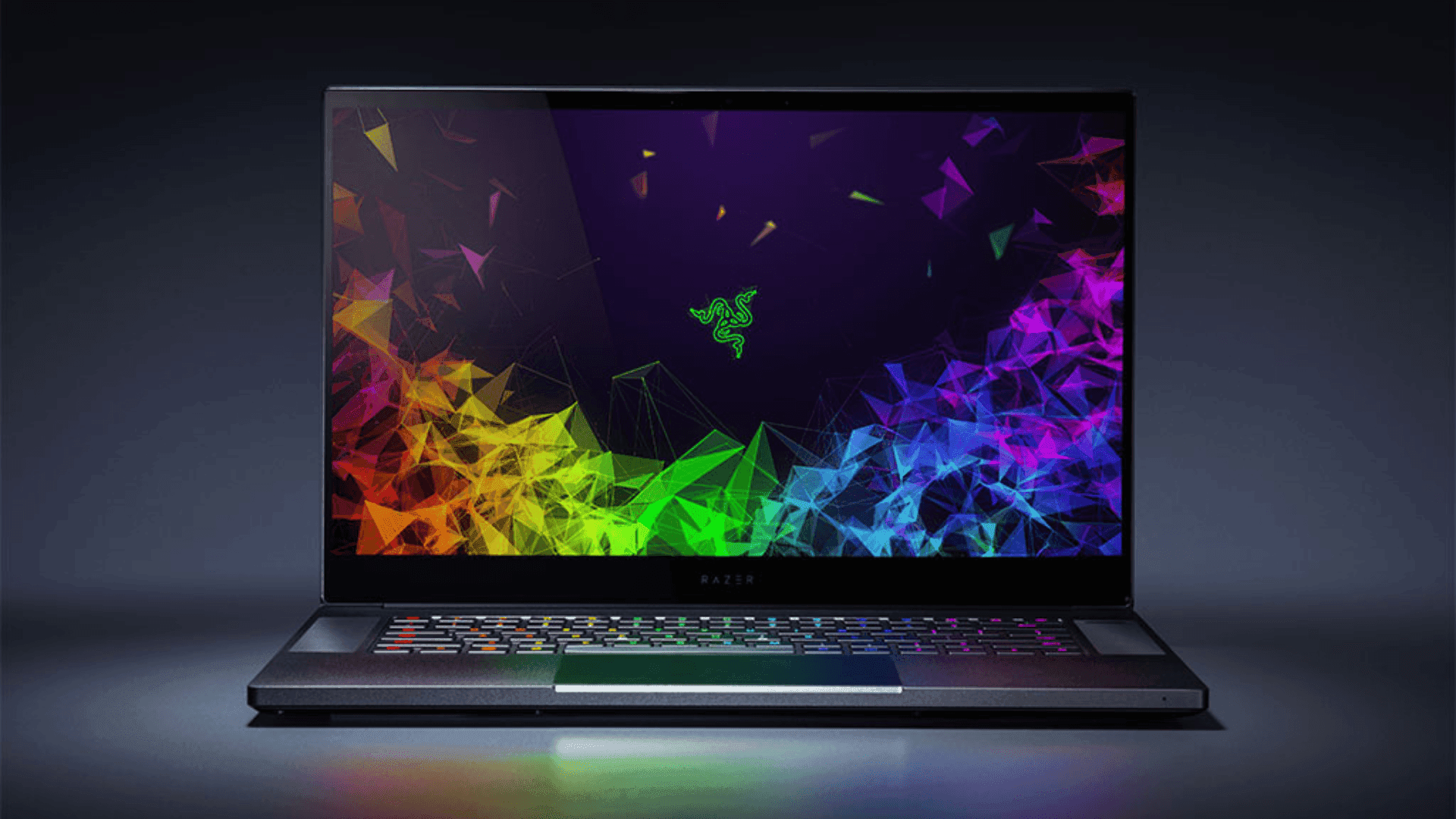
The 2025 Razer Blade 16 represents the company’s latest entry in the thin-and-light high-performance laptop segment. Designed for both content creators and gamers, the Blade 16 combines premium materials, a high-refresh OLED display, and powerful AMD and Nvidia hardware. The unit tested features an AMD Ryzen AI 9 HX 370 processor paired with an Nvidia GeForce RTX 5090 GPU, 32 GB of LPDDR5x memory, and a 2 TB PCIe Gen4 SSD. While the laptop delivers strong performance and good thermals, software inconsistencies and some design decisions limit its appeal.
Design and Build Quality
The 2025 Blade 16 adopts an all-metal CNC aluminum chassis finished in matte black. At 2.1 kilograms, it is lighter than previous Blade models and comparable to devices like the MacBook Pro 16 and Asus ROG Zephyrus G16. The design is compact without sacrificing ergonomics, offering a spacious wrist rest, strong hinges, and a subtle rear rubber foot that improves airflow underneath the chassis.
Despite the premium feel, some flex is noticeable on the keyboard deck and around the lid, likely due to the thinner metal panels used to reduce weight. The large, backlit green Razer logo on the lid is visually prominent and may not appeal to all users, though it can be covered with a decal. The lid opens to a maximum angle of 135 degrees, which is sufficient for desk use but may feel limiting when working on a lap.
The Blade 16 includes a comprehensive selection of ports. Two USB-C 4.0 ports support data transfer, DisplayPort 1.4, and 100W charging, while HDMI connects directly to the Nvidia GPU for external displays. USB-A ports and an SD card reader complete the layout. However, the routing of USB-C ports through the integrated GPU limits their suitability for gaming on external monitors, as GSync is unavailable in this configuration.
Keyboard and Touchpad Experience
The 2025 Blade 16 features a centered keyboard layout without a numeric keypad. An additional column of function keys has been added on the right, which may require adjustment for new users. Key travel is moderate, and typing feedback is somewhat shallow, though acceptable for general productivity. Per-key RGB backlighting is well-implemented, with secondary key functions brightening when the Fn key is pressed.
The touchpad is large and smooth, with reliable palm rejection and quiet physical clicks. Despite the sizeable front bevel, accidental ghost touches are minimized, making the laptop usable on a desk or on the lap. The built-in IR camera supports Windows Hello but no fingerprint sensor is included.
Display Performance
The 16-inch OLED display operates at a QHD+ resolution of 2560 by 1600 pixels with a 16:10 aspect ratio. It supports a 240 Hz refresh rate with a 0.2 millisecond response time and 100 percent DCI-P3 color coverage. This combination makes it well-suited for gaming, media consumption, and content creation. Brightness peaks at around 400 nits, which is adequate for indoor use but can be limiting in bright environments. Being an OLED panel, the display requires careful usage to avoid burn-in and flickering at low brightness, though the high PWM frequency helps mitigate noticeable effects.
Performance and Thermals
The reviewed Blade 16 is powered by an AMD Ryzen AI 9 HX 370 processor, which integrates four performance Zen5 cores and eight efficiency Zen5c cores with Hyper-Threading. It pairs with an Nvidia GeForce RTX 5090 GPU at 24 GB and a TGP of up to 155W with Dynamic Boost. The system handles demanding workloads efficiently for a thin-and-light chassis.
Razer’s Synapse software provides four power profiles: Silent, Balanced, Performance, and Custom. While Performance and Custom modes allow the CPU and GPU to run at their highest sustained power, Silent and Balanced modes prioritize quieter fan operation with modest drops in performance. Software inconsistencies in Synapse can occasionally cause stuttering or double-registered keystrokes, though most issues are resolved by closing the app.
In benchmarks, the Blade 16 performs consistently under load. Cinebench R15 and R23 loop tests show stable CPU performance with scores around 3,300 to 3,400 points on high-power modes. GPU performance in 3DMark and Uniengine Superposition confirms that the RTX 5090 handles modern titles at high settings with minimal throttling. Thermal management is effective, keeping surface temperatures reasonable even during extended gaming sessions.
Everyday Use and Battery
In day-to-day tasks such as web browsing, streaming, and office work, the Blade 16 is quiet and responsive. Fan noise remains unobtrusive on Balanced and Silent profiles, though it ramps up under sustained load in Performance mode. The 90 Wh battery offers moderate runtime, consistent with other high-performance laptops in this category. Audio performance from the six-speaker system is adequate for casual media consumption but does not match dedicated external speakers or high-end ultrabooks.
Final Thoughts
The 2025 Razer Blade 16 is a strong contender in the thin-and-light high-performance laptop space. Its premium build, versatile OLED display, and capable AMD and Nvidia hardware make it suitable for both gaming and content creation. Drawbacks include software inconsistencies, limited screen angle, prominent lid branding, and a high price point across configurations. Users seeking a portable, high-performance laptop with good thermals will find the Blade 16 appealing, though careful consideration of software stability and cost is advised.
Make sure to check out our articles on gaming gadgets:
Best Apple Products for Gaming
Best Nintendo Switch Accessories
Best Gaming Androids (phones)
Frequently Asked Questions (FAQs)
What processor does the Razer Blade 16 2025 use?
The top configuration of the 2025 Blade 16 features the AMD Ryzen AI 9 HX 370, a 12-core, 24-thread processor designed for sustained performance in thin-and-light laptops.
Which GPU is included in the 2025 Blade 16?
This model comes with the Nvidia GeForce RTX 5090 GPU with 24 GB of memory and a maximum TGP of 155W using Dynamic Boost.
Is the display suitable for content creation?
Yes, the 16-inch OLED QHD+ display covers 100% DCI-P3, supports 240 Hz refresh rate, and has fast response times, making it suitable for gaming and content creation.
How long does the battery last?
Battery life is moderate, typical for high-performance laptops. The 90 Wh battery supports everyday use but may require frequent charging under gaming or intensive workloads.
Are there software issues with the Blade 16?
Some users have reported occasional stuttering or double-registered keystrokes in the Razer Synapse software. Closing Synapse generally resolves these issues, but higher-power profiles require it to function.
Is the Blade 16 portable?
At 2.1 kilograms and 17.4 mm thick, the Blade 16 is compact for its class and easy to carry, comparable to other thin-and-light laptops in the high-performance segment.
Can it run games on external monitors through USB-C?
USB-C ports are routed through the integrated AMD GPU, which limits high-performance gaming externally. HDMI connects directly to the Nvidia GPU and supports external displays with DSync.