
Pokémon Legends: Z-A has given players a new way to experience Lumiose City, blending exploration, tactics, and evolving battle systems. As more players step into this updated version of the Kalos region, a set of practical strategies can help ease the early experience and improve overall performance. In typical fashion for games with evolving mechanics, understanding systems like move management, positioning, and multiplayer structure goes a long way toward smoother progression. The following overview presents clear, grounded advice for anyone looking to get more out of their time in Pokémon Legends: Z-A.
Understanding Early Game Progression
One of the earliest tasks players encounter involves assisting Mable at the Pokémon Research Lab. Her research assignments provide TMs, which are important for building stronger move sets across a player’s entire team. These rewards are not automatic, so it is necessary to regularly check the “Mabel’s Research” tab in the main menu to manually redeem them. Because TMs play a central role in shaping combat strategy, consistently reviewing her tasks helps maintain a well-prepared roster.
The main menu also houses several features that streamline daily gameplay. Players can reorganize their teams from Boxes whenever they are not in battle and adjust moves freely, including those newly learned. Healing items can be used during battles, and evolutions can be triggered without returning to a designated location. These flexible functions support a more fluid pace and reduce backtracking across Lumiose City.
Exploration becomes more manageable as fast travel points unlock throughout the city. Pokémon Centers and other landmarks can be selected directly from the map for quick travel, and taxis can carry players to destinations they have not yet reached. Once benches become available, they allow players to advance time, offering access to nighttime events such as the Z-A Royale or daytime activities like training. The Challenger’s Ticket system also encourages steady progression, since Ticket Points can accumulate over several nights, and promotion matches typically function during both day and night.
Improving Battle and Catching Efficiency
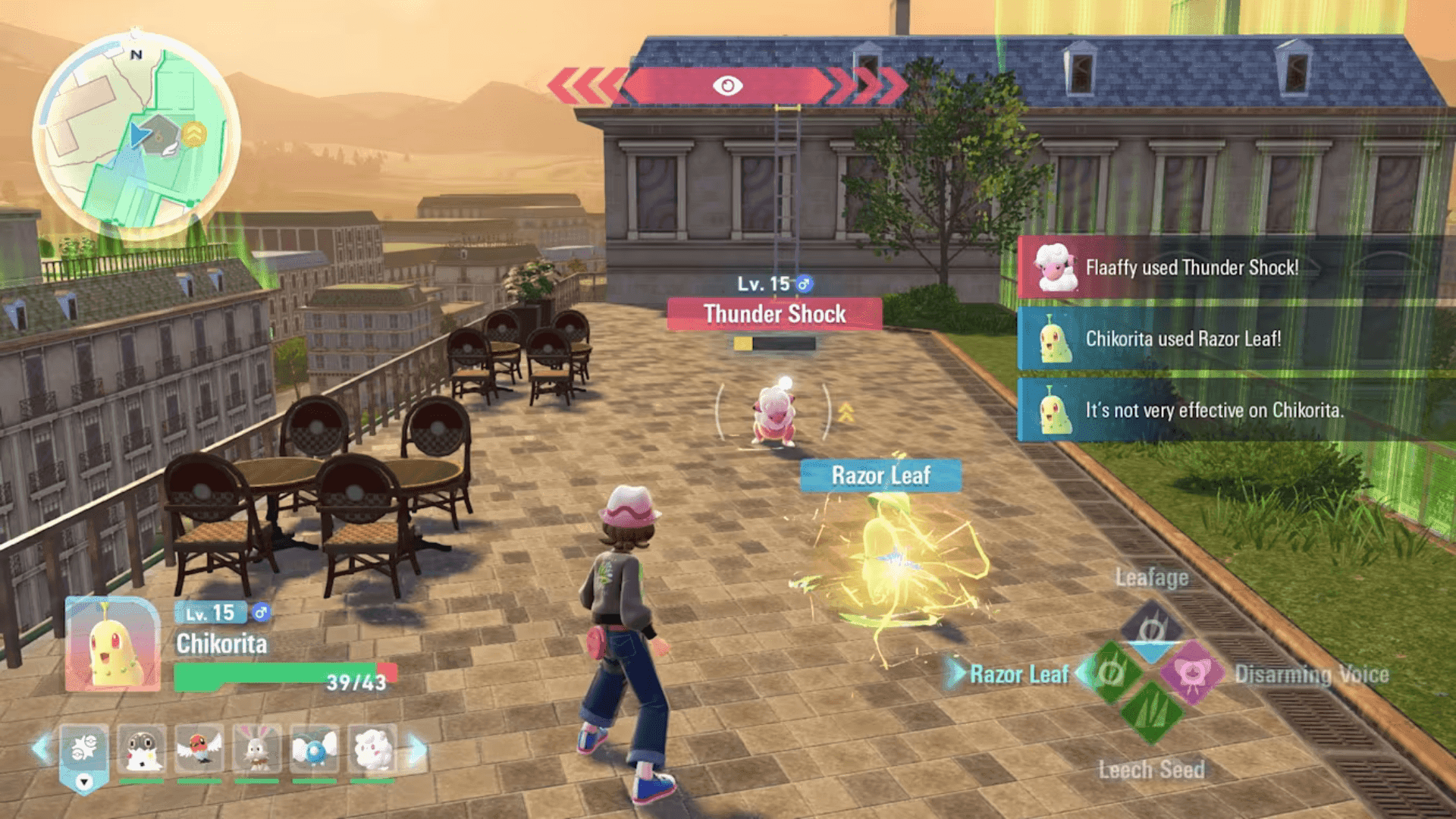
Combat in Pokémon Legends: Z-A continues to rely on move effectiveness, but the game uses clear symbols to communicate how each move will perform against a target. Two circles mark super effective attacks, one circle signals neutral damage, a triangle identifies reduced effectiveness, and an X indicates that a move will have no effect. This visual clarity makes it easier to plan turns and avoid wasting actions during key encounters.
Approaching wild Pokémon or Trainers with stealth offers a noticeable advantage. Remaining crouched or hidden increases the likelihood of initiating battles on favorable terms or securing catches more efficiently. Positioning is also central to the game’s battle design. Some moves cause a Pokémon to surge forward, which can help in dodging incoming attacks or creating opportunities. However, unplanned movement can also disrupt a player’s strategy if used without considering the consequences.
Players should not hesitate to recall their Pokémon when an opponent appears ready to unleash a strong attack. Timing this action correctly prevents unnecessary knockouts, though players must also be careful not to place themselves in the path of powerful moves.
Navigating Multiplayer Battles
Ranked Battles and Private Battles introduce a competitive pace that emphasizes speed and adaptability. Scoring in these modes is not limited to knocking out an opponent’s Pokémon; points may also come from landing the first hit or delivering the highest number of total attacks. This gives players multiple ways to contribute, even if they are not securing finishing blows.
Online battles tend to move faster than single-player encounters, so low-cooldown moves and attacks with wide coverage can provide consistent value. Options like Surf, Earthquake, Fly, or Dig can help maintain pressure or avoid incoming damage. Pokémon swaps, limited to three per match, add another layer of strategy by offering a way to evade attacks or reposition. When timed correctly, Mega Evolution grants a brief invincibility window that can be used to reset momentum or avoid critical damage.
Overall, success in multiplayer sessions depends on balancing aggression with awareness, choosing moves that support quick decision-making, and using swaps in moments that create tactical openings.
Frequently Asked Questions (FAQs)
How do players get more TMs in Pokémon Legends: Z-A?
Players can earn TMs by helping Mable with her research tasks in the Pokémon Research Lab. Rewards must be redeemed manually in the “Mabel’s Research” menu.
Does positioning really matter in battles?
Yes. Certain moves alter a Pokémon’s position, which affects evasion, spacing, and overall strategy during combat.
Can time be changed in the game?
Once benches are unlocked, players can rest on them to move time forward, allowing access to time-specific activities.
How do fast travel and taxis work?
Fast travel unlocks automatically when visiting places like Pokémon Centers, while taxis can transport players to locations they have not yet reached.
What is the best way to score points in multiplayer battles?
Players can earn points by knocking out opponents, landing the first hit, or dealing the most total damage during a match.
How many times can players swap Pokémon in Ranked or Private Battles?
Each player can swap Pokémon three times per match, making timing important for avoiding damage or resetting positioning.
Is Mega Evolution useful in multiplayer mode?
Mega Evolution provides a brief invincibility window, which can help avoid major attacks or create an opening for counterplay.