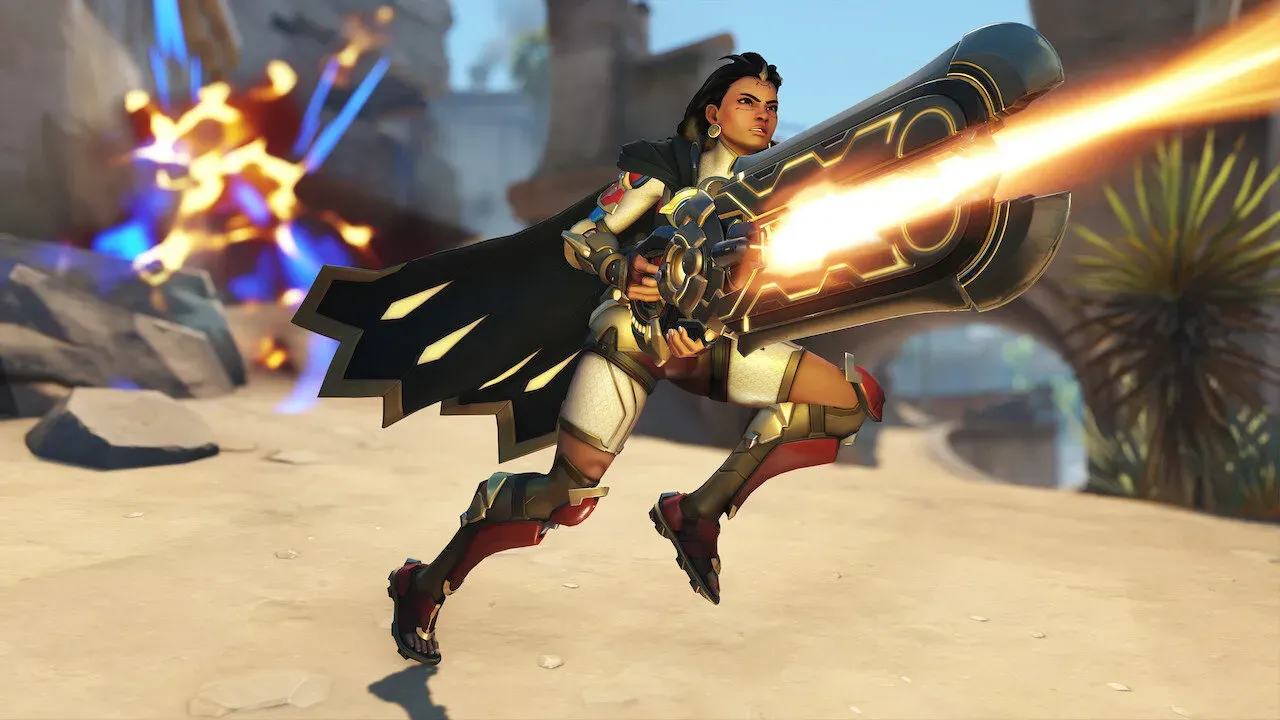
Overwatch’s roster is expanding again, and Blizzard’s newest hero introduces a movement-focused playstyle built around aerial control and tether-based mechanics. Known as Jetpack Cat, the flying feline support hero brings persistent flight, ally repositioning, and enemy displacement into regular matches. After a short early access period, players have already begun experimenting with how the character can change positioning and team coordination across maps.
Rather than leaning into raw damage or traditional healing alone, Jetpack Cat is designed around mobility and control. The hero’s kit emphasizes vertical play, environmental interaction, and the ability to reshape fights by physically moving both teammates and enemies around the battlefield.
A Hero Designed Around Aerial Control
Jetpack Cat’s defining trait is near-constant flight. Using a built-in jetpack, the hero can stay airborne while navigating rooftops, choke points, and objectives from angles unavailable to most of the Overwatch cast. While flying, Jetpack Cat is still able to heal allies and pressure opponents, allowing the character to function as a mobile support rather than a stationary backliner.
This approach shifts how teams think about positioning. Instead of rotating only through ground-based routes, Jetpack Cat encourages vertical movement and quick extractions from dangerous situations. On maps with layered terrain, the hero can create unexpected engagements by delivering teammates to high ground or pulling them out when fights turn unfavorable.
How Jetpack Cat’s Tether Changes Team Movement
At the center of Jetpack Cat’s kit is a tether ability that links the hero to another target. Unlike some earlier Overwatch abilities that could unintentionally disrupt teammates, Jetpack Cat’s tether requires allies to opt in. Once connected, the tethered teammate is carried wherever Jetpack Cat flies, as long as the hero avoids being eliminated mid-transport.
This mechanic allows for coordinated plays that reposition slower heroes, rescue teammates under pressure, or open new flanking paths. Instead of relying on teleporters or speed boosts, Jetpack Cat physically moves players through space. That can mean lifting a tank into a fortified position, extracting a damaged DPS from a losing fight, or setting up angles that normally take several seconds to reach on foot.
Because the tether depends on communication, Jetpack Cat rewards organized teams that plan movement in advance rather than reacting at the last second.
Interactions With Ultimates and Deployables
Jetpack Cat’s tether is not limited to friendly players. The ability can attach to certain hero constructs and ultimates, creating interactions that alter how familiar abilities work in practice. Ashe’s ultimate, B.O.B., can be tethered and repositioned while he continues firing, giving teams a chance to adjust his placement after deployment.
Similarly, D.Va’s Self-Destruct mech can be tethered mid-action, allowing Jetpack Cat to correct a poorly aimed throw and shift the explosion toward a more effective detonation point. These interactions give teams limited recovery options when ultimates are mistimed or mispositioned, turning potential mistakes into situational opportunities.
By interacting with existing abilities rather than replacing them, Jetpack Cat integrates into the broader Overwatch ecosystem without invalidating established hero strategies.
Enemy Control Through Jetpack Cat’s Ultimate
Jetpack Cat’s ultimate ability expands the tether mechanic to enemy players. Instead of attaching to allies or objects, the hero can latch onto an opponent and drag them through the air. This creates a form of sustained displacement rather than a quick knockback or stun.
In practice, this means Jetpack Cat can pull enemies away from defensive setups, separate supports from their tanks, or even drag targets off the map on stages with environmental hazards. The ultimate introduces a positional threat that forces opponents to consider vertical danger as well as traditional crowd control.
Rather than focusing on burst impact, the ultimate emphasizes control and isolation, allowing teams to reshape engagements by removing a key opponent from the fight long enough to swing momentum.
What Jetpack Cat Means for Overwatch’s Meta
Jetpack Cat’s design leans heavily into movement and map control, which may influence how teams approach objectives and team fights. Heroes that benefit from high ground or surprise positioning gain additional value when Jetpack Cat is present, while opponents must account for airborne threats and unexpected extractions.
Because the hero relies on consent-based tethering, Jetpack Cat avoids the trolling concerns seen with some earlier movement abilities, while still enabling creative playmaking. In coordinated play, the hero’s impact will likely be strongest, where communication allows teams to maximize repositioning and timing.
Early experiments have already shown unusual scenarios, including airborne duels between tethered teammates from opposing Jetpack Cats, adding another vertical layer to Overwatch’s combat flow.
Jetpack Cat’s Place in Blizzard’s Ongoing Expansion
Jetpack Cat joins the roster as part of Blizzard’s larger restructuring of Overwatch’s seasonal content. The studio plans to release 10 heroes over the next year while tying updates more closely to narrative and lore development. The goal is to keep the competitive environment evolving while introducing mechanics that go beyond simple damage and healing roles.
Jetpack Cat reflects that direction by emphasizing interaction, movement, and battlefield manipulation. Instead of increasing firepower, the hero expands how players think about space and positioning during matches.
Jetpack Cat officially launches on February 10, bringing a new mobility-focused support option to the Overwatch lineup and introducing tether-based flight as a core mechanic in standard play.
Make sure to check out our articles about top games to play in 2026:
Best Nintendo Switch Games for 2026
Best First-Person Shooters for 2026
Best PlayStation Indie Games for 2026
Best Multiplayer Games for 2026
Most Anticipated Games of 2026
Top Game Releases for January 2026
Frequently Asked Questions (FAQs)
What is Jetpack Cat in Overwatch?
Jetpack Cat is a new support hero in Overwatch that uses flight and tether mechanics to reposition allies, interact with ultimates, and displace enemies.
When does Jetpack Cat release in Overwatch?
Jetpack Cat officially joins the Overwatch roster on February 10.
Can Jetpack Cat move teammates around the map?
Yes. Jetpack Cat can tether willing teammates and fly them to different locations, enabling rescues, flanks, and vertical positioning.
Does Jetpack Cat’s tether work on enemies?
The hero’s ultimate allows Jetpack Cat to tether to an enemy and drag them out of position, including off the map in certain situations.
What makes Jetpack Cat different from other support heroes?
Instead of focusing mainly on healing output, Jetpack Cat emphasizes mobility, aerial control, and battlefield manipulation through movement and tether mechanics.
Can Jetpack Cat interact with other hero ultimates?
Yes. Jetpack Cat can tether to deployables like Ashe’s B.O.B. and D.Va’s Self-Destruct mech to reposition them and adjust their impact during fights.