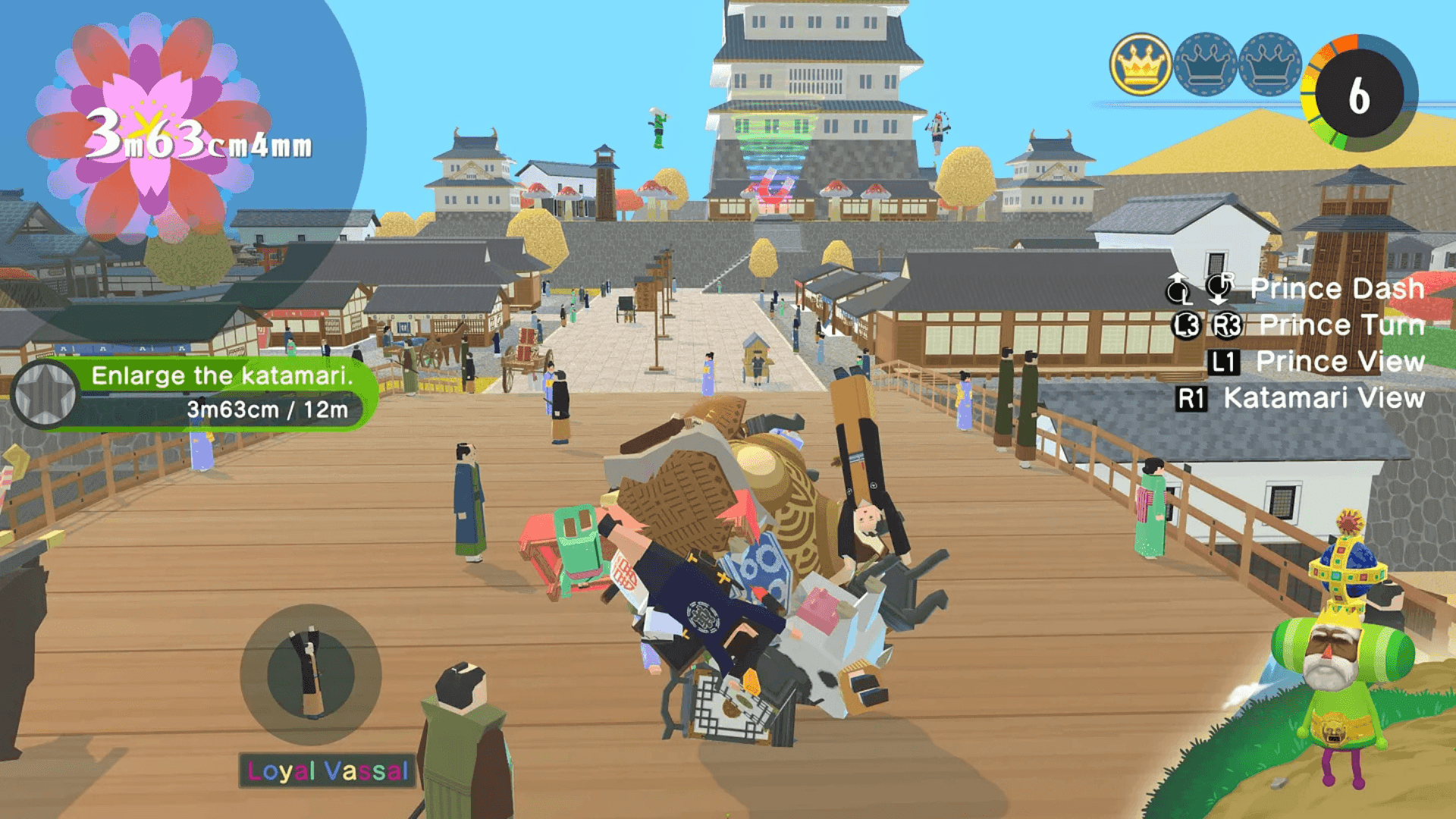

Bandai Namco’s latest entry in the Katamari Damacy series, Once Upon a Katamari, introduces a fresh take by placing players in historical settings. Developed by Rengame, a collaboration of three Japanese studios including Monkeycraft, the game maintains the core mechanic of rolling objects to grow a katamari while exploring eras from prehistoric times to ancient Greece.
Instead of the familiar collection of everyday items like thumbtacks, radios, and office towers, players now roll up samurai, dinosaurs, cavemen, and other era-specific objects. This approach adds variety to the series’ signature gameplay, offering both visual humor and inventive interactions as the katamari expands. Players might find themselves rolling up Spartan warriors, Olympic torches, or even philosophers like Aristotle and Plato, alongside the usual assortment of bric-a-brac.
Gameplay Evolution Through Historical Settings
The historical levels give the game a new sense of progression and novelty. As players navigate each era, the camera pulls back to reveal expansive environments filled with thematic objects. Greek mythology, Egyptian tombs, and prehistoric landscapes provide opportunities for new comedic moments, such as encountering Cerberus or rolling up a sarcophagus. This contrasts with previous titles like Katamari Damacy Rolling Live, which, while visually polished, largely followed familiar gameplay patterns.
Despite the changes, the game preserves the fundamental appeal of the series: gradually rolling larger objects and watching the environment change around the growing katamari. Some players may wish for more dinosaur-focused levels, but the variety of historical content offers a distinct experience for both longtime fans and newcomers.
Development and Series Context
Rengame’s development team shows an ability to both honor and expand the Katamari formula. Monkeycraft, one of the contributing studios, worked on the recent remakes Katamari Damacy Reroll and We Love Katamari Reroll + Royal Reverie, giving them familiarity with the franchise. The studio’s focus on absurdist humor fits naturally with the historical twist, allowing the series to explore new creative directions.
Bandai Namco has presented Once Upon a Katamari as the first original entry in the series in 14 years, highlighting a willingness to innovate rather than rely solely on remakes. By combining historical settings with the franchise’s signature rolling mechanics, the game demonstrates that even a long-running series can evolve without abandoning its core identity.
Historical Levels Offer Fresh Visual and Gameplay Opportunities
The game’s new levels are designed to surprise players with objects they would not normally expect in a Katamari game. The thematic consistency within each era allows for both humor and strategic thinking as players determine the best path to grow their katamari. Historical content also encourages exploration, rewarding players with unique interactions that would not appear in more modern or mundane settings.
Frequently Asked Questions (FAQs)
What platforms is Once Upon a Katamari available on?
Once Upon a Katamari is available on major consoles and PC. For the latest compatibility details, check the official Bandai Namco website.
How long is a typical playthrough?
Players can expect around 10 hours to reach the credits, depending on exploration and completion of all levels.
Does the game introduce new mechanics?
The core rolling mechanics remain intact, but the historical settings and themed objects provide fresh challenges and interactions not seen in previous titles.
Who developed Once Upon a Katamari?
The game was developed by Rengame, a collaboration of three Japanese studios including Monkeycraft, known for their work on recent Katamari remakes.
Is this the first new Katamari game in years?
Bandai Namco promotes Once Upon a Katamari as the first original entry in 14 years, though there have been remakes and smaller releases like Katamari Damacy Rolling Live.
Does the game include multiplayer features?
The focus of Once Upon a Katamari is primarily single-player, emphasizing exploration and growth through historical settings.