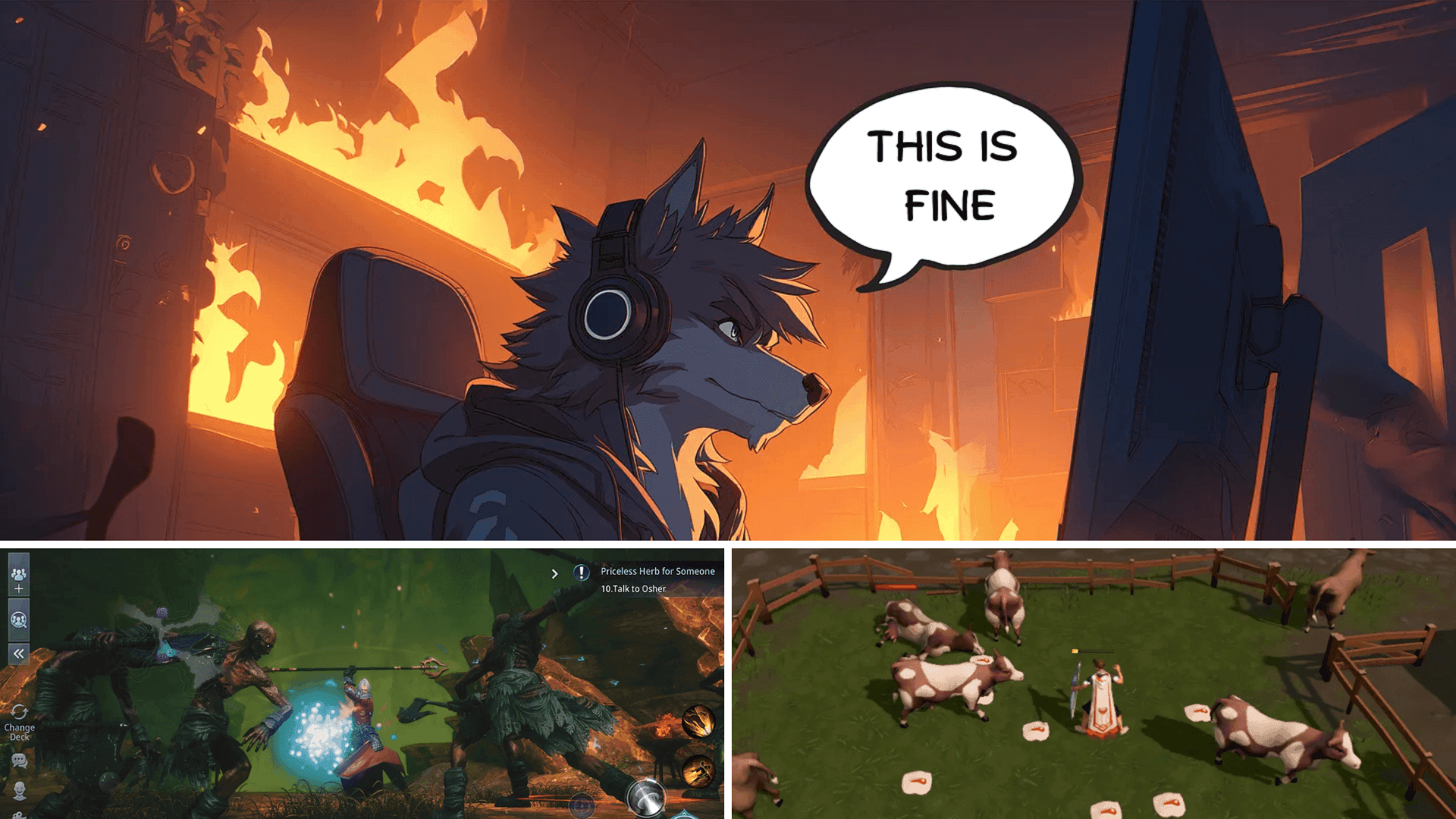
Web3 gaming has been widely promoted as the future of interactive entertainment, yet many games in the space struggle to sustain even a modest player base. According to a recent deep dive from Wolves DAO, performance issues appear when more than a few hundred players log in, revealing that the main challenge is not blockchain technology, but the underlying design of the games themselves. Unlike traditional MMOs, web3 projects often prioritize token mechanics over gameplay depth, leaving little reason for players to remain engaged beyond initial rewards.
Lessons from Eastern MMOs
Lessons from Eastern MMOs
Eastern MMOs such as MIR4, Lineage, and MapleStory provide insight into sustainable game design. These games thrive on repeated progression loops, structured social systems, and clear economic incentives. According to Doyi Kim, formerly of WeMade and now with Cross Protocol, these games succeed because they align design with player expectations that have developed over decades. The grind in these titles is not incidental; it is a core element that creates rhythm and investment, encouraging players to log in regularly and participate in long-term progression.
In contrast, many web3 games treat grind as a secondary concern, offering minimal loops that fail to generate meaningful engagement. When rewards are shallow and progression feels forced, players quickly churn, leaving tokenomics to collapse under their own weight. Understanding the role of structured gameplay in retention is a critical lesson for web3 developers looking to build lasting experiences.
Monetization Models and Player Behavior
Monetization in gaming differs significantly across regions. In Asia, games openly incorporate pay-to-progress systems that coexist with long-term grinding. This balance allows both players who invest heavily in their characters and those who prefer to earn progress through time investment. The result is a stable in-game economy that supports sustained engagement.
Web3’s early play-to-earn model focused primarily on rewarding players for earning, often neglecting the importance of a balanced spend-to-earn economy. Without mechanisms to integrate active spenders, these economies struggle to maintain stability. Understanding how monetization interacts with player behavior is crucial to designing web3 games that last beyond the launch phase.
The Importance of Social Systems
Community structures are central to player retention in successful MMOs. Guilds, alliances, and in-game social interactions generate stories and dynamics that extend beyond core gameplay. Titles like MIR4 are designed to make social engagement meaningful, with guild conflicts and collaborative challenges giving players reasons to log in daily.
Web3 projects often promote “community” through marketing channels such as Discord or Telegram, but these spaces rarely replicate the depth of interaction found in traditional MMOs. Building systems that allow for meaningful player collaboration, competition, and narrative creation can increase retention and strengthen in-game economies.
Infrastructure and Scalability
The technical backbone of a game plays a critical role in its longevity. Eastern developers have historically focused on server stability, marketplace reliability, and anti-cheat measures to support millions of players. Cross Protocol, for example, emphasizes cross-chain and cross-game infrastructure designed to maintain fairness and scalability.
Web3 games frequently overlook these fundamentals, focusing instead on token distribution or novelty features. When servers fail under moderate load, or marketplaces become unreliable, player trust erodes quickly. Infrastructure may seem unglamorous, but it is essential to sustaining a functional, engaging game environment.
Long-Term Success Requires Durable Systems
Most web3 games struggle to survive beyond their initial hype. Token volatility, shallow gameplay loops, and insufficient community engagement often lead to rapid decline. By contrast, Eastern MMOs have demonstrated resilience, maintaining active player bases and economic systems over decades. Longevity in gaming requires thoughtful design that prioritizes engagement, balance, and scalability over short-term rewards.
Studying the history of MMO design provides web3 developers with clear lessons. Incorporating meaningful progression, balanced monetization, structured social systems, and reliable infrastructure can help web3 games retain players and achieve long-term viability.
Frequently Asked Questions (FAQs)
Why are many web3 games failing? Most web3 games struggle due to design issues rather than technical limitations. Short, shallow gameplay loops and unbalanced economies fail to retain players beyond initial rewards.
What can web3 developers learn from MMOs? MMOs offer lessons in meaningful progression, monetization balance, social systems, and infrastructure scalability. Studying these elements can improve player retention and economic stability.
How does grind impact player engagement? In successful MMOs, grind creates a sense of progression and belonging. Properly designed repetitive tasks motivate players to continue logging in, whereas meaningless grind leads to churn.
How should web3 games handle monetization? Sustainable web3 economies should balance earners and spenders. Incorporating both progression through time and optional purchases helps maintain long-term engagement and economic stability.
Why is community important in web3 games? Structured social systems, such as guilds and alliances, generate stories and interactions that keep players invested. Community is a major factor in retention and long-term success.