
According to a recent report by SuperJoost, the gaming industry is heading toward a major shift in how games make money. Two models - direct-to-consumer monetization and ad-based revenue - are beginning to take hold, and their impact could redefine the balance of power across the industry.
Breaking Away from Platform Control
For years, major platform holders like Apple and Google have controlled mobile gaming’s financial ecosystem. That grip started to loosen when Epic Games CEO Tim Sweeney won key legal battles against the tech giants. The rulings forced Apple and Google to remove “anti-steering” clauses - rules that stopped developers from directing players to buy content outside their app stores.
The result was immediate. Mobile game developers saw an estimated $4.1 billion boost in revenue after they gained the ability to process transactions directly. That change has sparked new business ventures. AppCharge, for instance, raised $58 million in August to build systems that help developers handle payments off-platform. Unity also launched a free payment feature in partnership with Stripe, allowing what it calls “app-to-web payments.”
These changes are more than just technical upgrades. They represent a move toward greater independence for game makers, enabling them to sell directly to players without paying the high commissions typically charged by app stores. It’s an evolution that could make the gaming economy more open and flexible in the long term.
Advertising Finds Its Place in Gaming
While direct sales are growing, the other major revenue shift comes from advertising. For years, advertisers have struggled to find a natural way to connect with players. That seems to be changing.
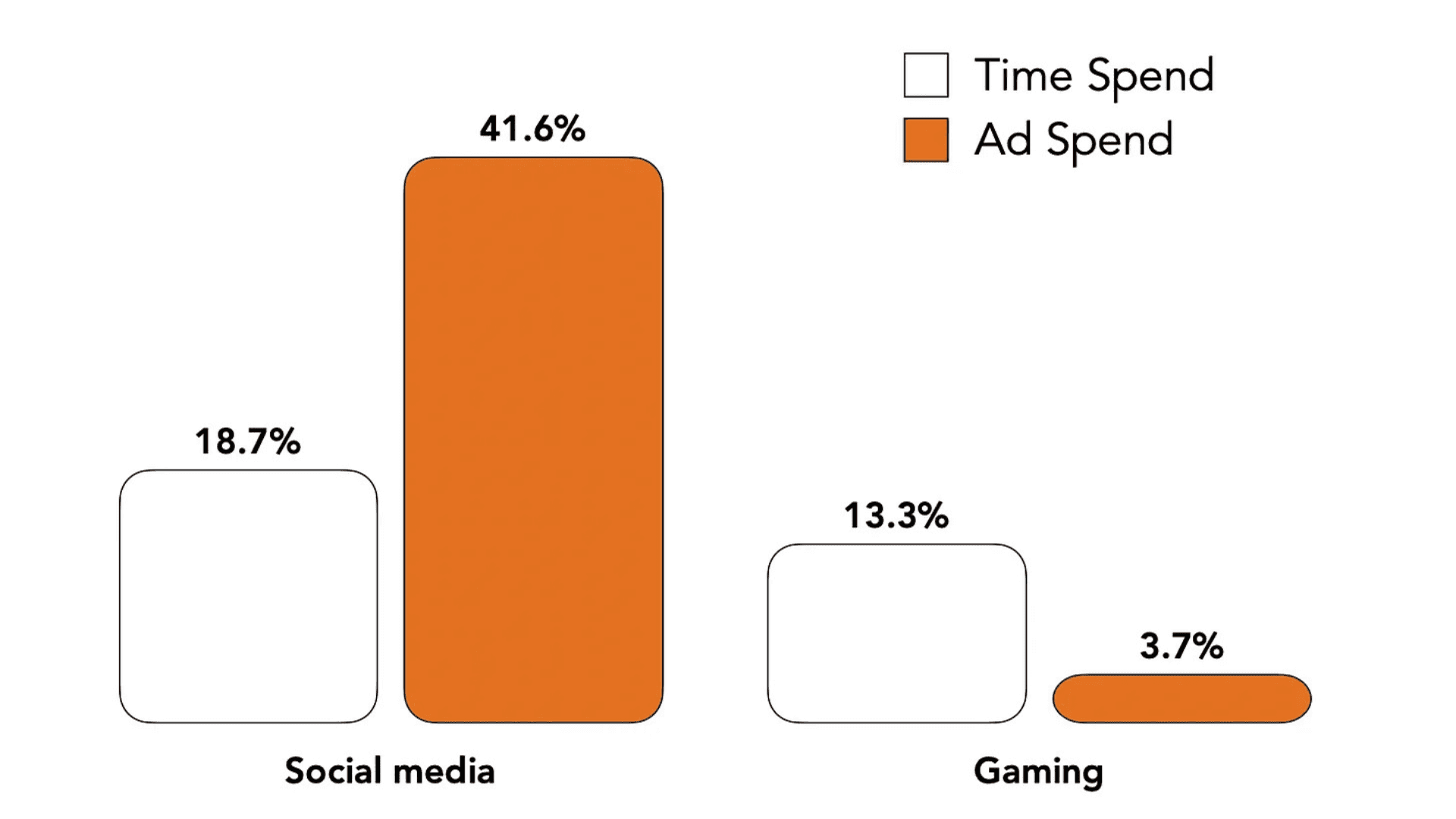
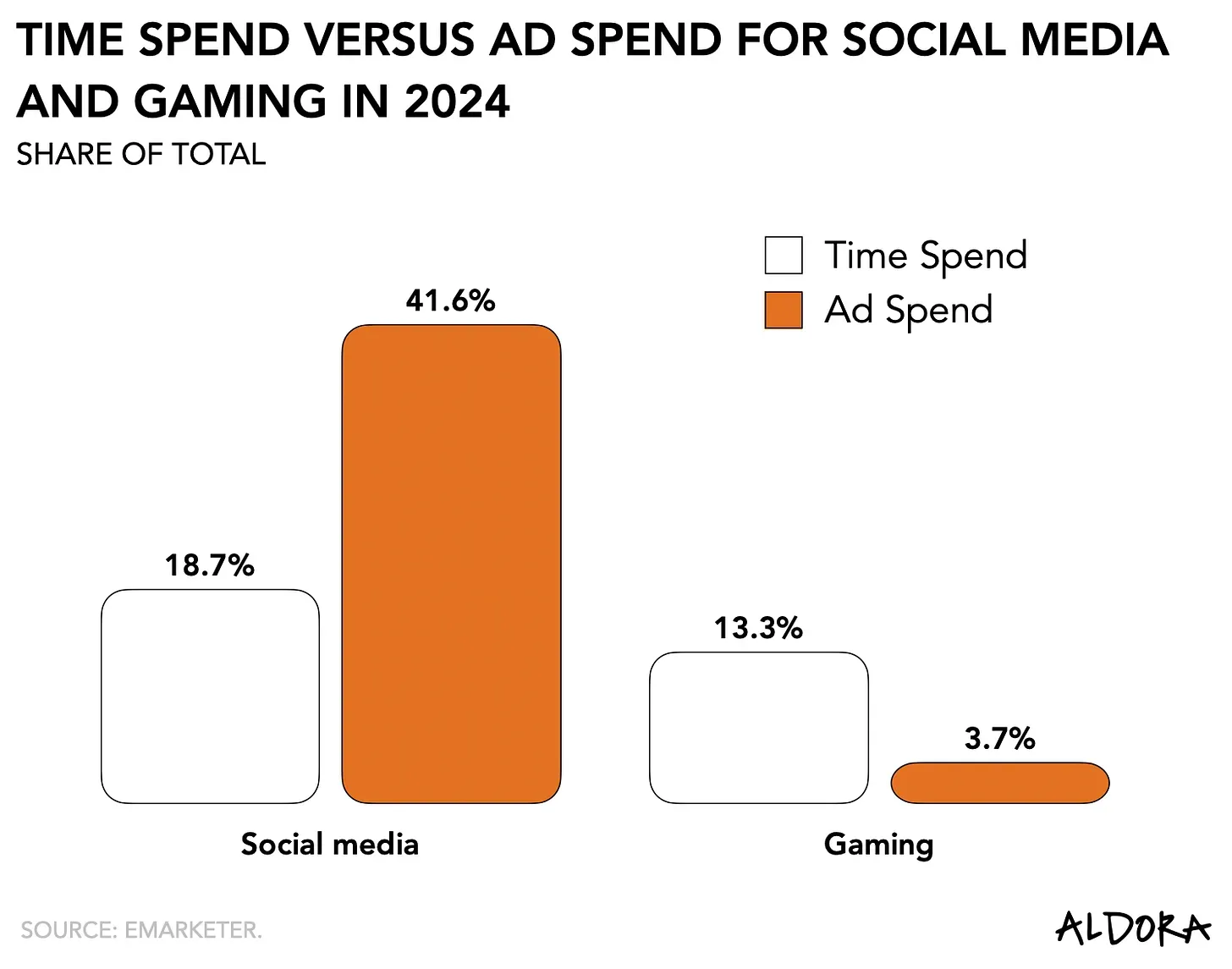
As social media platforms face declining engagement and rising toxicity, advertisers are looking for new, more meaningful spaces to reach audiences. According to eMarketer, in 2024 players spent about 13.3 percent of their total media time gaming, yet games only accounted for 3.7 percent of ad spending. Social media, on the other hand, received more than 41 percent of ad budgets despite only capturing 18.7 percent of consumer time.
That mismatch highlights a clear opportunity. Publishers and advertisers are beginning to see gaming as a more engaging and emotionally resonant environment for brand interaction. Instead of static logos or intrusive pop-ups, the focus now is on integrated experiences that feel natural within gameplay.
Some companies are already acting on this shift. Zynga and Square Enix have partnered with Gadsme to bring in-game ad placements to mobile titles. Xbox recently confirmed an ad-supported version of its Cloud Gaming service for employees, signaling a potential wider rollout. If successful, this could make ad-supported gaming a standard part of the industry’s future.
Innovation Beyond Monetization
These changes are part of a broader push toward innovation in game distribution. As development and marketing costs continue to rise, publishers are searching for ways to diversify revenue without compromising the player experience.
However, revenue models alone won’t solve the industry’s challenges. Companies still need to rethink their overall strategies, from production pipelines to player engagement. The move toward direct-to-consumer and ad-based systems could ease financial pressure, but it also calls for structural changes that allow creative teams to operate more sustainably.
Gaming has always been a space for experimentation, and these emerging models are another step in that direction. Whether through web3 integration, app-to-web payments, or in-game ad ecosystems, the industry is finding new ways to fund its growth while staying connected to players.
Source: SuperJoost
Frequently Asked Questions (FAQs)
What is direct-to-consumer monetization in gaming?
Direct-to-consumer monetization allows developers to sell in-game items, subscriptions, or content directly to players without relying on third-party app stores or platforms. This model gives publishers more control over pricing and customer relationships.
Why are developers moving away from app stores like Apple’s and Google’s?
Legal rulings have weakened the restrictions that forced developers to use platform payment systems. By handling payments directly, developers avoid high commission fees and can offer better prices to players.
What are in-game ads, and how do they work?
In-game advertising integrates branded content or messages into a game’s environment. Instead of interruptive pop-ups, modern in-game ads aim to appear naturally within the gameplay, such as on billboards or virtual products.
How big is the advertising opportunity in gaming?
Despite players spending more than 13 percent of their media time gaming, only about 4 percent of ad budgets currently go to the medium. This gap suggests a major opportunity for advertisers to expand into the space.
Are ad-based games replacing traditional monetization models?
Not entirely. Ad-supported games are expected to complement rather than replace direct sales and microtransactions. They offer an additional way for developers to generate revenue, especially in free-to-play environments.
What role does web3 play in these new models?
While not the main driver, web3 technologies may support direct-to-consumer strategies by offering decentralized ownership and transaction systems, giving both players and developers more autonomy.