
InsideTheSimulation’s introduction to crypto traces back to 2017, when a casual mention of Ethereum during a work project sparked enough curiosity to explore further. After an early and brief encounter with Bitcoin years before, buying Ethereum on a whim led to a more serious investigation into its purpose. The discovery of programmable money and smart contracts shifted his perspective, revealing a system with the potential to reduce unnecessary intermediaries and realign value distribution.
Since then, he has witnessed several pivotal moments in the ecosystem, from the ICO boom to DeFi Summer and the NFT expansion. Throughout these cycles, he has remained focused on Ethereum’s long-term roadmap and its commitment to decentralization, which he views as essential to maintaining a neutral global network.
"What’s kept me around is the continued delivery of the Ethereum roadmap over time while staying true to the core principle of decentralization. I’ve been here through the ICO boom and bust, DeFi Summer, the NFT craze, “the burn”, The Merge to Proof of Stake, the current L2 era, and am looking forward to the continued execution of the roadmap. The world needs a neutral network like Ethereum to exist."
How Community Reinforced a Decentralization Mindset
As a day-one member of the EVMavericks, InsideTheSimulation credits the group with helping deepen his understanding of Ethereum’s technical and cultural landscape. The NFT, awarded to top contributors on the r/ethFinance subreddit, pulled together a knowledgeable community of builders and analysts.
Even with early controversy around the trading of these NFTs, the experience demonstrated how digital ownership supports continuity in online communities. Being able to prove identity across platforms without relying on centralized authorities reinforced his appreciation for self-custody and decentralized systems. To him, NFTs represent a tool for portable credibility, not speculation.
"A lot of people have a bad mental model for NFTs. Their reputation is deservedly sullied because of all the nonsense that went on during the NFT craze. But for me, NFTs are the key to tokenized legitimacy. They provide an immunity to being de-platformed and scattered to the wind and an ability to transport all of your social credibility between platforms in a way that’s not really possible otherwise."
From Web2 to AI: A Shift Toward Agent-Based Development
After a decade in web2, InsideTheSimulation recognized that AI tools were becoming central to modern workflows. Rather than resisting the shift, he adapted to it, describing his current role as more of an engineering manager for LLMs than a traditional software engineer.
This transition accelerated when he began experimenting with the Remix platform. Building and publishing games removed the psychological barrier of needing preexisting expertise. His approach changed from “How do I do this?” to “This can be done - how do I guide the tools to get there?” This mindset shift continues to shape his work in agentic AI, where he focuses on developing tools that make intelligent agents more accessible and more useful.
"Besides, agentic AI is really fun and the landscape is brand new. It’s a great opportunity to establish the tooling that everyone is going to need - because right now making an “agent” that’s actually smart is incredibly difficult. I’m hoping I can be a part of making that easier for people."
Building Lane Splitter Through Constraints and Creativity
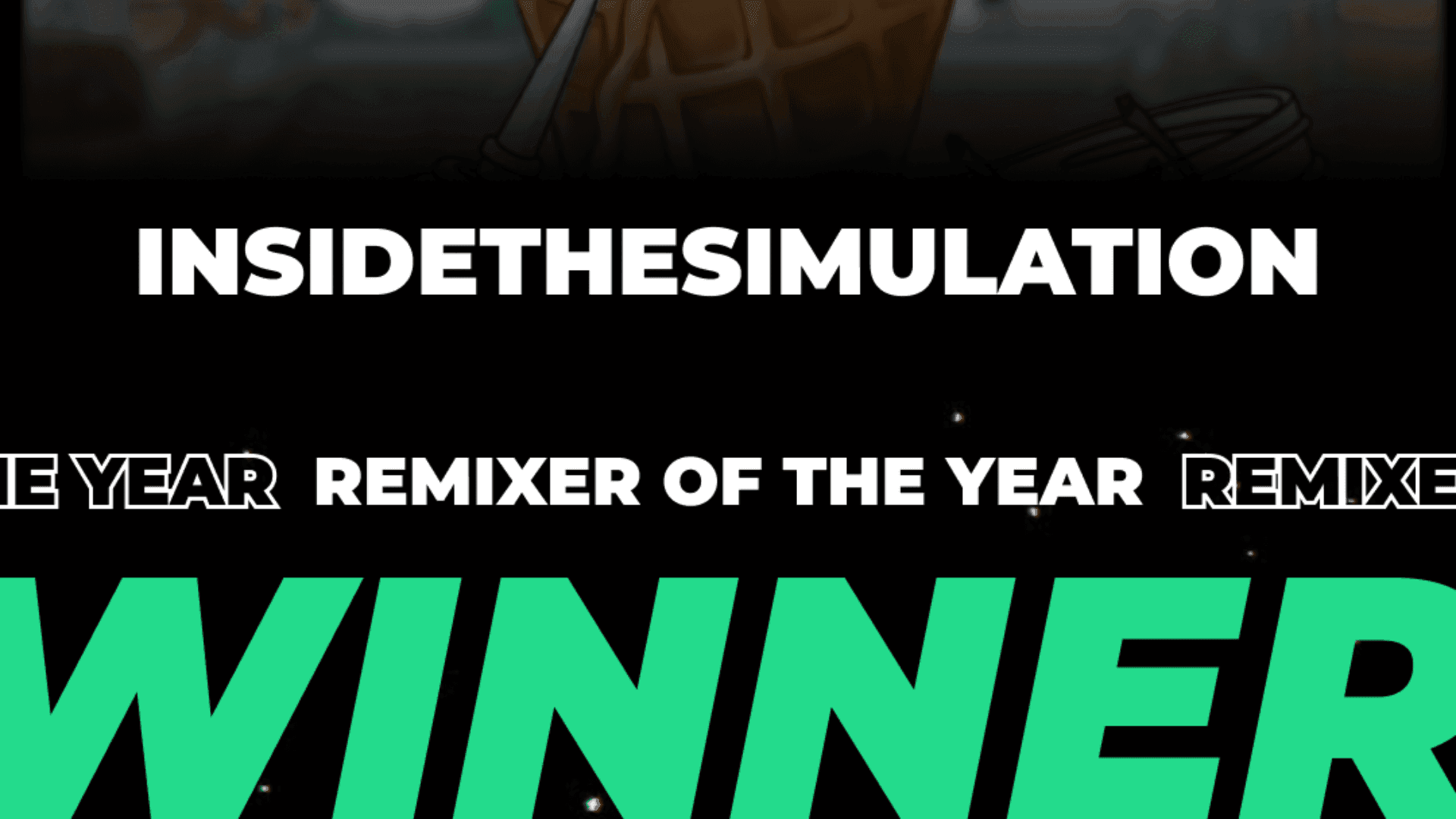
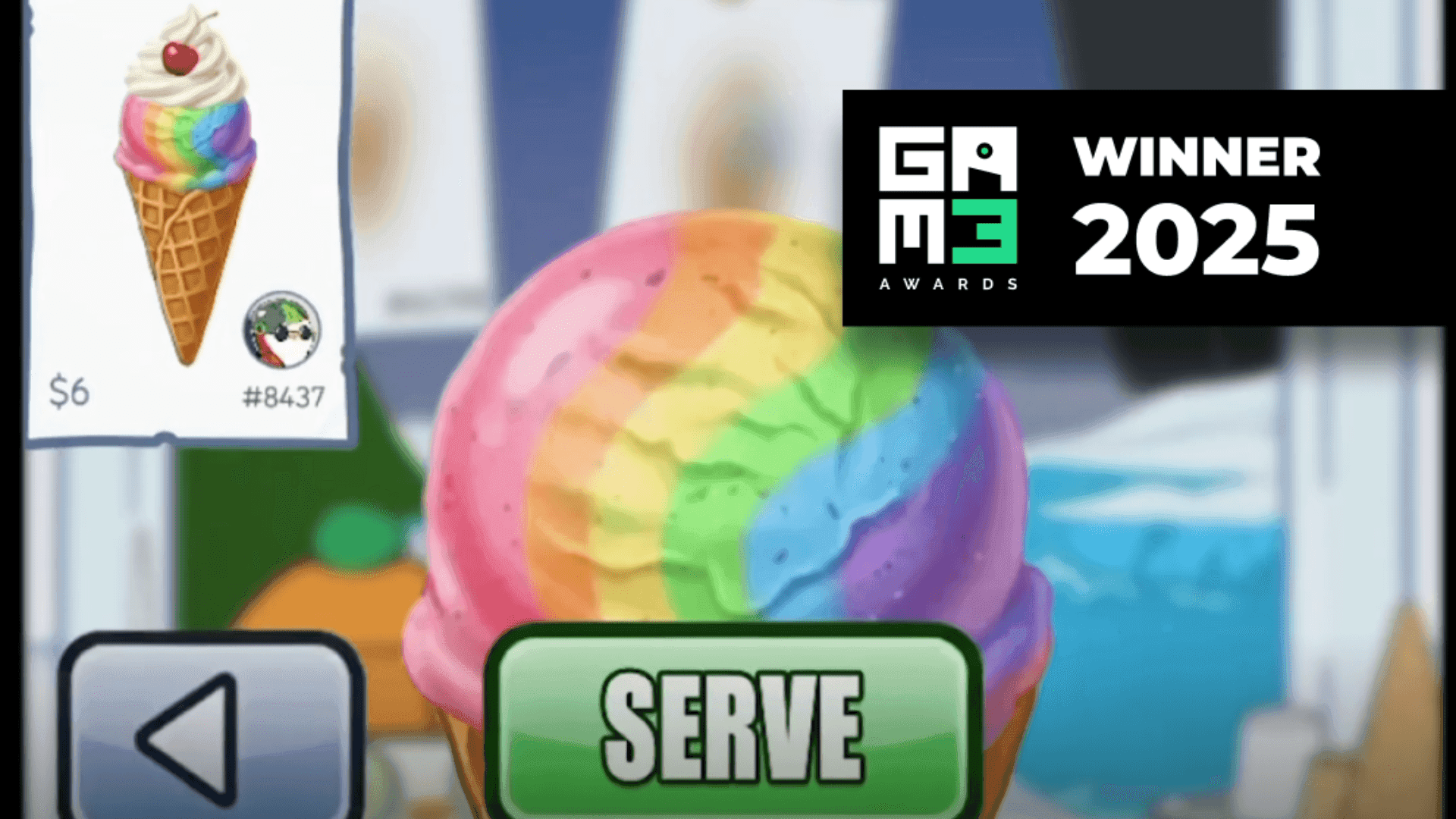
Lane Splitter, the game that helped earn him “Remixer of the Year” at our GAM3 Awards 2025, began as a personal technical experiment. He wanted to learn how older 2D engines created a 3D effect, a style made iconic by arcade cabinets that blended simplicity with visual depth. The nostalgic feel of those games informed the project’s direction.
The two-week development window for a game jam imposed tight constraints that ultimately helped shape its design. A bug that shifted the camera into a first-person viewpoint unexpectedly improved the experience, redirecting the game’s trajectory. Instead of designing complex upgrade systems, he focused on replay-driven mechanics such as close-call multipliers and customizable elements. The result was a game that players found approachable yet engaging.
Even with its success, InsideTheSimulation maintains a practical view of what will or won’t resonate with wider audiences. He acknowledges that his personal favorite projects sometimes draw the most criticism, and he holds strong respect for fellow creators producing competitive work on the Remix platform.
"It’s a huge honor to win the GAM3 Award. Like I said before I make games I myself want to play. I’m often surprised by what does and does not resonate with a larger audience. For example, I love the insane difficulty of SHNNFT! (Super Happy Nounish Ninja Fun Time - a game where you jump sawblades) but it’s been by far the game I’ve gotten the highest amount of negative feedback on. I still think it’s some of my best work."
What Lane Splitter Reveals About Web3’s Direction
While Lane Splitter’s performance is notable, InsideTheSimulation sees the platform surrounding it as a more significant indicator of web3 gaming’s future. Remix supports a wide variety of games in a lightweight, social format, which he compares to a “TikTok for games” model. He believes that as technical barriers continue to fade, players will engage with these games without needing any understanding of crypto mechanics behind the scenes.
He also argues that the term “web3 game” may unnecessarily draw attention to the technology rather than the benefits. For him, the focus should be on player ownership, accessible creator tools, and open markets that avoid unnecessary middlemen. By emphasizing value and gameplay rather than labels, he believes the space can reach a broader audience.
"I think it’s less Lane Splitter itself and more that it can exist along with such a varied catalog on a platform like Remix. I believe @0xChuckstock and @0xBlackstock have a real shot at carrying out their thesis of being “TikTok for games” and I’m excited to do what I can from my side to help them get there. I do think we’re going to see more generalized acceptance of web3 gaming as the technical mechanics get abstracted away. You won’t have to know anything about crypto to enjoy Remix and I think that’s super important. As @SamSteffanina would say: Web3 gaming is inevitable.”"
Looking Ahead: Merging Ethereum, AI Agents, and Interactive Worlds
InsideTheSimulation plans to continue developing games while deepening his involvement in agentic AI. He is especially interested in helping others understand what AI agents can do beyond simple chatbot functionality, offering guidance to teams seeking to integrate these systems into their workflows.
When imagining a classic game remixed through web3 mechanics, he highlights the potential of a survival-focused sandbox world with verifiable land ownership and peer economies. A structure similar to Minecraft but anchored in decentralized systems could support meaningful collaboration, resource trading, and emergent gameplay driven entirely by players.
“If anyone reading this needs insight, tooling, or assistance for AI agents then we should talk - my DMs are open across platforms. I’m @insidethesim.eth on Farcaster and @InsideTheSim on X.”
Frequently Asked Questions (FAQs)
What inspired InsideTheSimulation to enter the crypto space?
He entered crypto in 2017 after overhearing a conversation about Ethereum and becoming interested in its programmable-money capabilities and smart contract design.
What is the significance of the EVMavericks community to his philosophy?
The community reinforced his views on decentralization, self-custody, and the importance of verifiable digital ownership, particularly through NFTs used for identity consistency across platforms.
How did Lane Splitter originate?
Lane Splitter began as a technical experiment to understand 2.5D visual effects before evolving into a game jam project with simple mechanics and a focus on replayability.
What does he believe is the future of web3 gaming?
He expects growth in platforms that abstract away blockchain complexity, making web3 games accessible without requiring players to understand crypto.
Why does he think the term “web3 games” is limiting?
He views the label as overly focused on technology rather than player benefits, which can lead to misconceptions and discourage traditional gamers.
What areas does he plan to explore next?
He aims to continue game development and expand work in agentic AI, helping companies understand how to build useful and practical AI agent systems.
What classic game concept would he like to remix using web3 technology?
He proposes a survival sandbox world with verifiable land ownership and peer-to-peer economies, enabling deeper player-driven interactions.