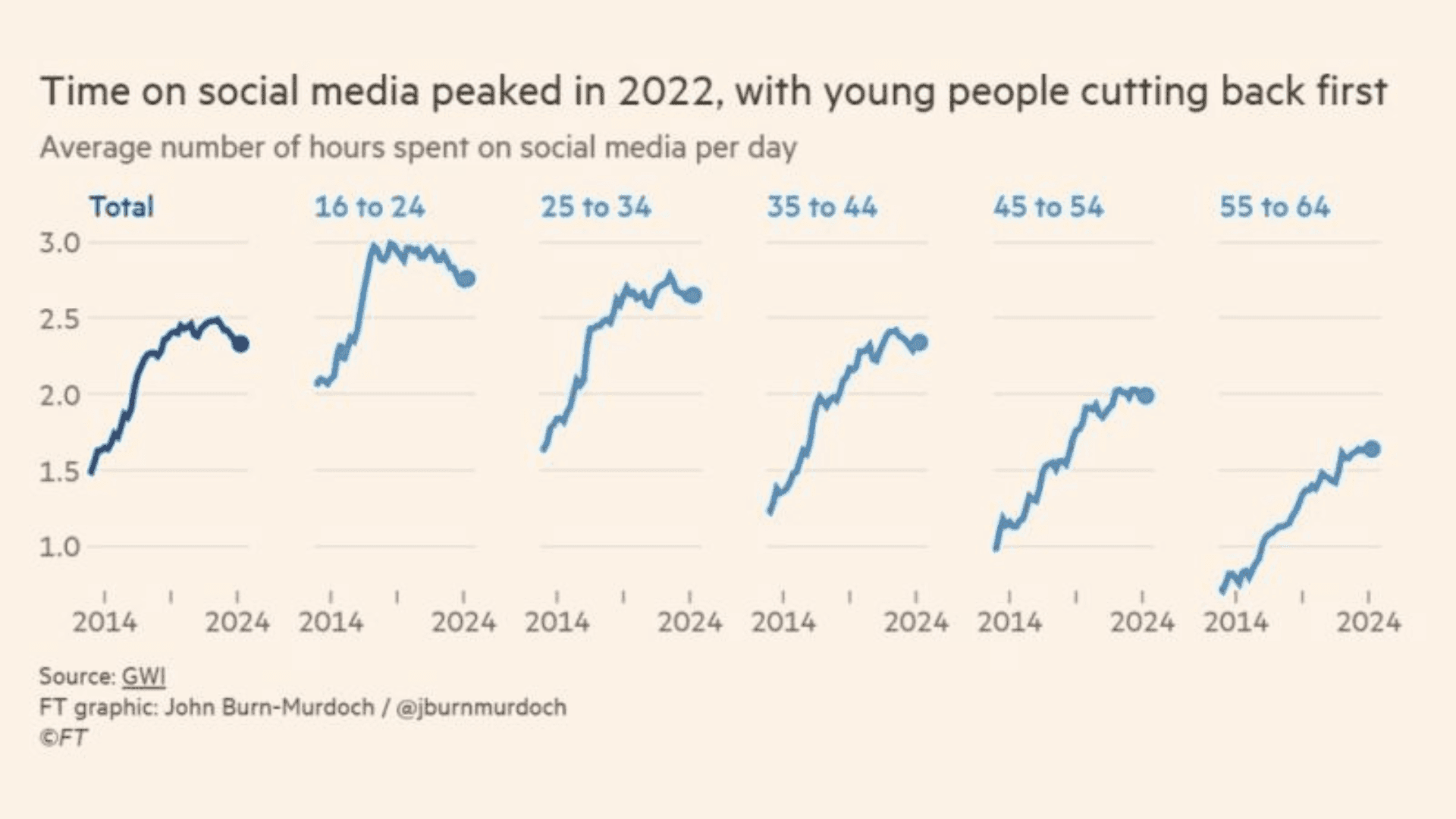
Greg Isenberg, CEO of Late Checkout, recently posted an analysis highlighting a notable change in how people are spending their time online. Referring to recent data from the Financial Times and GWI, he pointed out that social media use is shrinking for the first time since its rise two decades ago. What’s especially interesting is that the decline is being led by younger generations - people who grew up surrounded by social platforms but are now moving away from them.
This group has seen the entire evolution of social media - from its early promise of connection to its current state of constant engagement and algorithmic noise. Many have realized that the endless scroll doesn’t necessarily lead to happiness or smarter thinking. Instead, it often leaves users feeling drained and detached.
Brainrot Is Out. Meaning Is In.
AI Content Fatigue Is Accelerating the Trend
Isenberg attributes part of this decline to what he calls “AI slop,” referring to the growing presence of repetitive and artificial content on social platforms. Feeds filled with identical voices, synthetic faces, and recycled ideas have made many users lose interest. The effect, is a kind of “factory smell” that strips online interaction of its authenticity.
For many, this shift signals the end of a certain era of internet culture - the one driven by engagement metrics and attention-grabbing algorithms. Users are now seeking experiences that feel more intentional, genuine, and connected to real life.
From Endless Scroll to Slow Media
The decline in social media engagement doesn’t mean people are abandoning the internet. Instead, attention is moving toward “slow media” - formats that prioritize quality over quantity. This includes serialized content, long-form newsletters, and other experiences designed to be consumed deliberately rather than mindlessly.
Isenberg also predicts the rise of smaller, more focused online spaces. These private groups often operate like clubs, with application processes or shared rituals that build trust among members. There’s also growing interest in communities and brands that extend beyond the screen, hosting real-world events and encouraging offline connection.
The next wave of online platforms may use AI not to maximize engagement but to help organize meaningful experiences. He believes that this shift represents the breaking of a long-standing internet assumption - that more engagement automatically equals more value.
GAM3S.GG Newsletter
The Future of Online Connection
The decline in social media time marks a major turning point for digital culture. Younger users are moving away from algorithmic feeds in favor of curated, authentic experiences that promote belonging and purpose. Isenberg argues that this trend will eventually reach older generations, as they begin to adopt similar habits over the next few years.
For creators and companies, this change opens up new opportunities to design platforms and communities that value depth, identity, and real connection. Whether through web3 innovations, local meetups, or paid membership communities, the future of online engagement appears to be leaning toward authenticity rather than attention.
As Isenberg summarized in his post, “Brainrot is out. Meaning is in.”
Frequently Asked Questions (FAQs)
What does Greg Isenberg mean by “brainrot is out”? “Brainrot” refers to the overstimulation and passive consumption that comes from endless social media scrolling. Isenberg’s statement suggests that users are moving away from that behavior in favor of meaningful, thoughtful engagement online.
Why is social media usage declining? Recent data shows that social media usage is dropping for the first time in history. Younger users are leading this decline as they grow tired of algorithm-driven content and repetitive AI-generated posts.
What is “slow media”? Slow media refers to content that encourages intentional, focused consumption - such as newsletters, serialized updates, or community discussions. It’s a reaction to the fast, shallow nature of most modern feeds.
How does AI factor into this shift? AI-generated content has contributed to what Isenberg calls “AI slop,” or the sense that much of what users see online feels artificial and repetitive. In the future, AI may still play a role - but more as a tool for organizing information rather than optimizing engagement.
What opportunities does this trend create for new companies? Isenberg believes the next major digital companies will focus on building spaces that foster real connection and trust. This could include verified creator platforms, paid communities, or web3-based identity systems that prioritize authenticity over reach.