
Apple has made significant updates to the process for installing alternative app stores on iOS with the release of iOS 18.6 in July 2025. The new workflow reduces the installation process from 15 steps to six and removes a previously misleading scare screen that warned users about potential risks. The update also fixes a dead-end in iOS Settings that previously prevented users from completing installations.
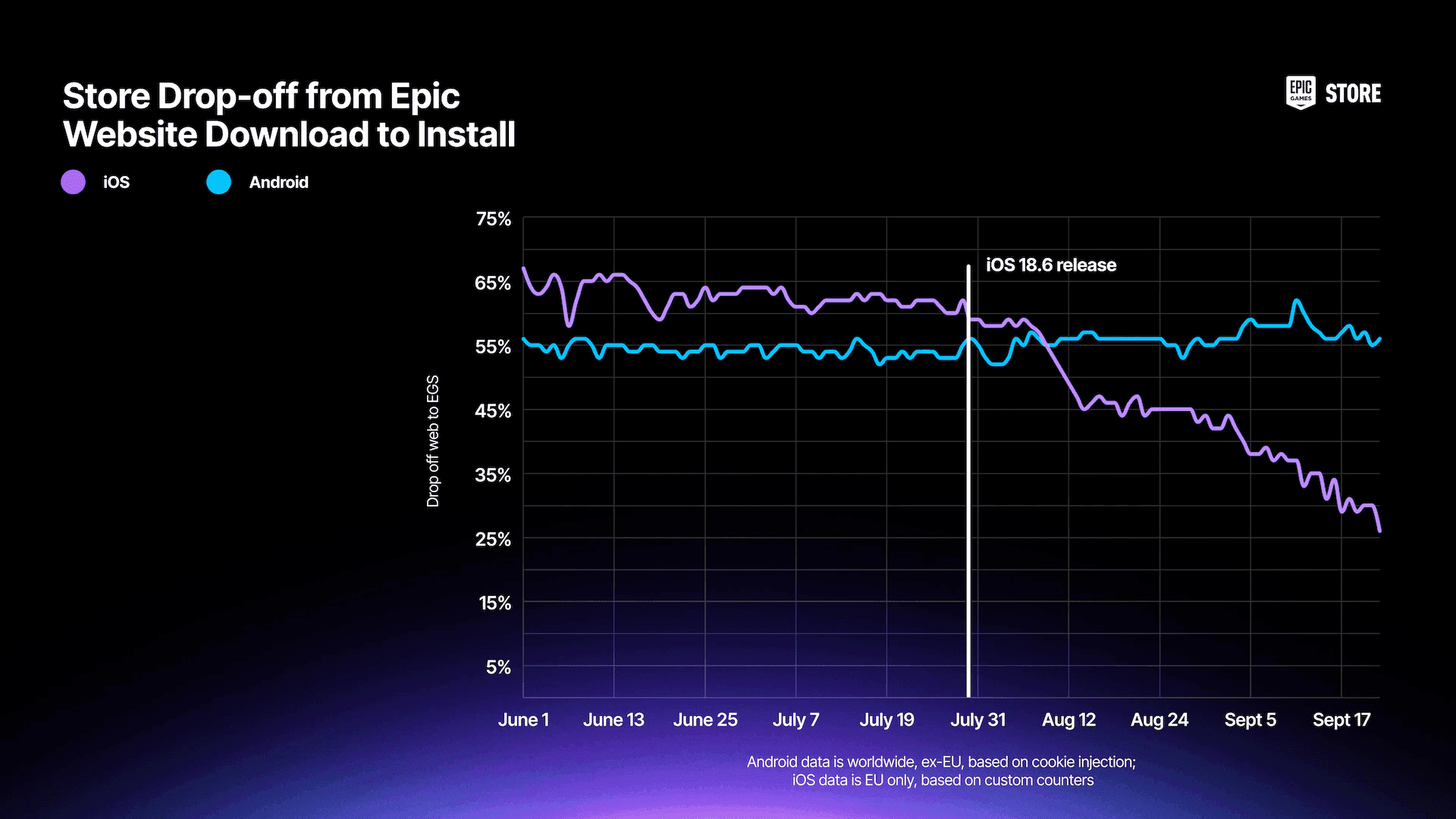
These changes have led to measurable improvements for users trying to install the Epic Games Store on iOS. Drop-off rates, which had hovered around 65%, have fallen to roughly 25% following the update. For the first time, iOS users are now installing the Epic Games Store at rates approaching those on Windows and Apple’s own Mac platform.
Persistent Competition Concerns
Despite these improvements, Apple’s broader policies toward competing app stores remain under scrutiny. Developers continue to raise concerns about fees, such as the Core Technology Fee, and the company’s approval and notarization requirements that influence app design. Developers supporting competing stores also report facing more restrictive terms on the App Store.
These practices are considered anticompetitive under the European Union’s Digital Markets Act. The result is that far fewer mobile games are distributed through the Epic Games Store on iOS compared with Android, limiting consumer choice and maintaining a competitive advantage for Apple’s own ecosystem.
Android Installation Challenges Remain
While Apple has made progress in the EU, Google’s Android platform has not implemented comparable changes. Installing the Epic Games Store on Android involves a 12-step process and includes a scare screen warning users that software from competitors “may be harmful.” These design choices continue to block successful installations more than half of the time worldwide.
Epic Games is challenging Google’s practices in the United States through the ongoing Epic v. Google case. The lawsuit raises questions about consumer rights, competition, and whether Google’s interface design undermines fair access to alternative app stores, including web3 applications.
Regulatory Oversight and the Future of Mobile App Competition
Apple’s iOS 18.6 improvements demonstrate that regulatory pressure can influence platform behavior, with noticeable effects on user success rates. However, both Apple and Google still face scrutiny for policies and design choices that may hinder competition, limit developer freedom, and reduce consumer choice. These ongoing issues illustrate the continued tension between mobile platform control and the principles of open ecosystems.
Frequently Asked Questions (FAQs)
What changed in iOS 18.6 regarding alternative app store installation?
Apple reduced the installation flow from 15 steps to six, removed misleading scare screens, and fixed a Settings dead-end, making it easier for users to install alternative app stores like the Epic Games Store.
How has Apple’s update affected Epic Games Store installs?
Drop-off rates for installation attempts have fallen from 65% to around 25%, with success rates approaching those on Windows and Mac.
Are Apple’s policies toward competing stores fully compliant with the law?
No. Developers report anticompetitive practices, such as fees and restrictions on apps supporting competing stores, which may violate the EU’s Digital Markets Act.
How does Android compare to iOS for alternative app store installation?
Android still has a 12-step install flow and a scare screen warning that software from competitors “may be harmful,” blocking more than half of attempted installations globally.
Do these issues affect web3 apps?
Yes. Restrictions and complicated installation processes on both iOS and Android can limit access to web3 applications distributed via alternative app stores.