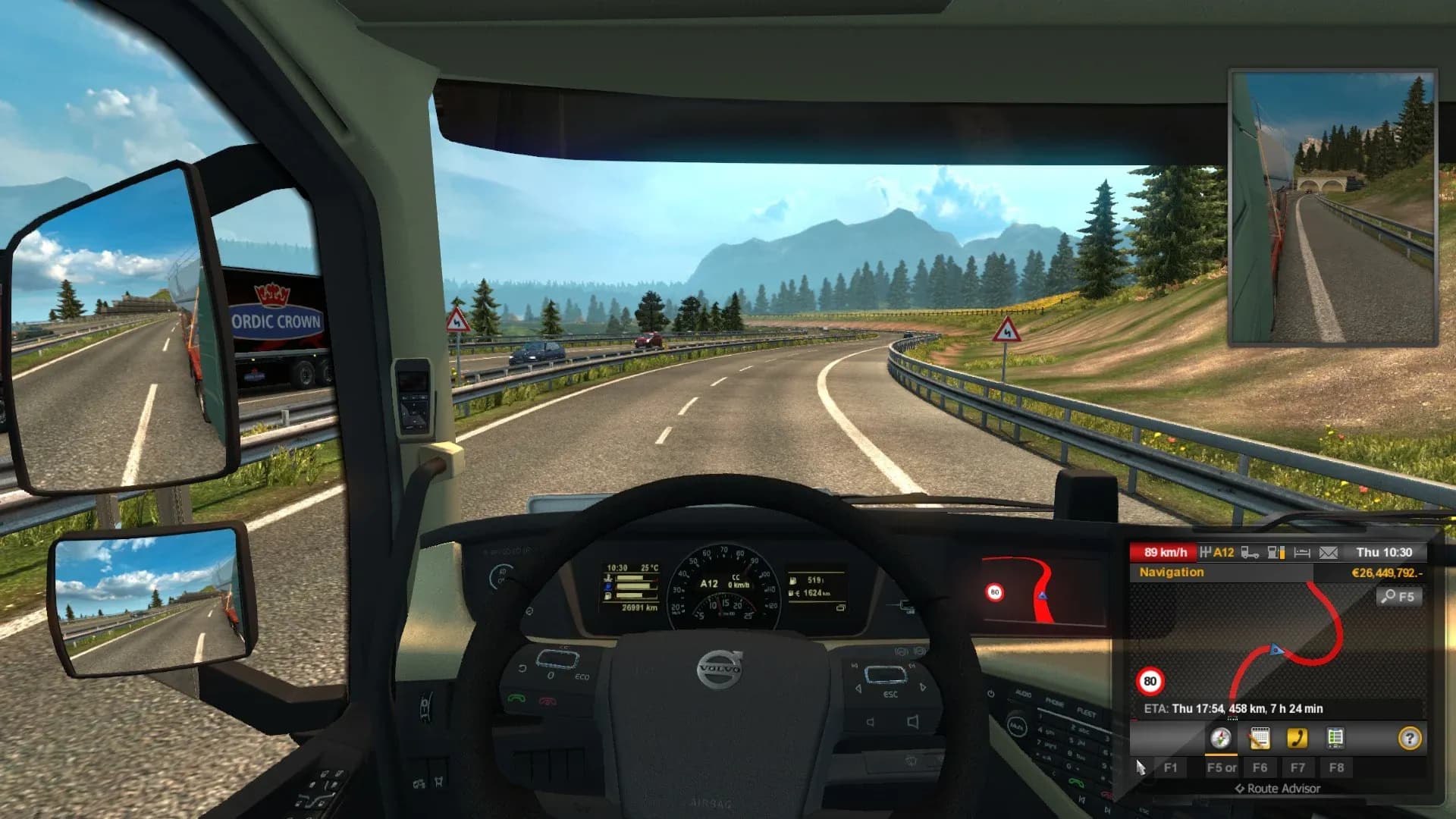

Starting your trucking career in Euro Truck Simulator 2 feels overwhelming at first. You're staring at menus, wondering where to begin, and questioning whether you'll ever own your own rig. Here's the truth: within a few hours, you'll be hauling cargo across Europe, earning serious cash, and building a logistics empire. This guide transforms confused beginners into confident truckers who understand every system in the game.
Starting your Trucking Career in ETS2
Your journey begins with profile creation. You'll choose your company name, logo, and headquarters location. This decision matters more than you think. Pick a city in a large country like the United Kingdom or Germany. Why? More cities mean more job opportunities early on, letting you unlock routes faster.
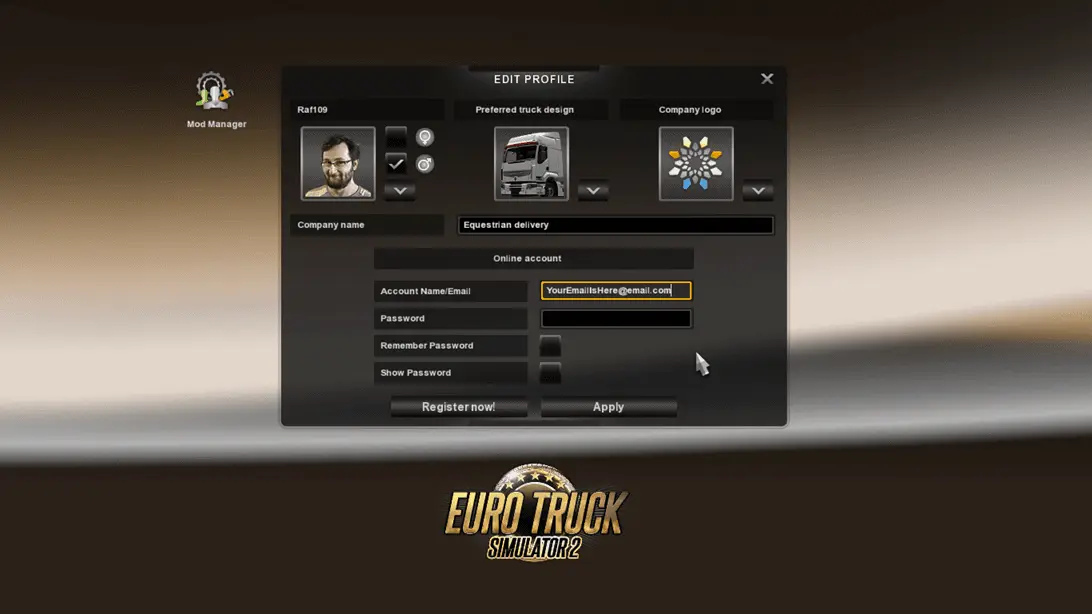
Profile Screen
After setting up your profile, the Input Wizard appears. You can use keyboard and mouse, but controllers provide smoother steering. Xbox and PlayStation controllers work perfectly, giving you analog control that makes highway driving feel natural.
Tip
Choose your headquarters city carefully. Manchester or Berlin offer excellent starting positions with numerous nearby destinations for quick progression.
Understanding Quick Jobs
You won't own a truck initially. Companies loan you vehicles through the Quick Jobs system. These contracts cover fuel costs, but damages and fines come from your paycheck. The company provides everything, you just drive.
When browsing available jobs, focus on three metrics:
- Total payout for the delivery
- Distance to your destination
- Payment per kilometer ratio
Jobs paying €0.50 per kilometer beat those paying €0.30, even if the total seems lower. Distance matters because each real-world minute equals roughly three in-game minutes. A 30-minute game delivery takes about 10 minutes of actual driving time.
Skills to Prioritize
Experience points unlock after each delivery, but you must select skills before they level up. Choose wisely because your selection determines which advanced jobs become available.
Here's the skill breakdown:
Start with Long Distance and ADR. These two skills open the most opportunities while you're learning. Ecodriving becomes valuable once you own your truck and pay for fuel yourself.
Skill progression menu
Important
Select your skill before completing deliveries. Unselected skills earn zero experience, wasting potential progression.
When to Buy Your First Truck
After several Quick Jobs, you'll receive an email from the bank offering a loan around €100,000. Don't panic about the debt. Daily payments stay manageable, especially once you access better-paying contracts.
You have two purchasing options at truck dealers:
New Trucks:
- Zero mileage and wear
- Full customization available
- Higher initial cost
- Perfect condition guarantee
Used Trucks:
- Significantly cheaper prices
- Some existing wear
- Limited customization initially
- Excellent budget choice
Used trucks work perfectly for beginners. You'll upgrade later anyway, so save that cash for garage expansions and trailers.
Accessing the Freight Market
Owning your truck unlocks the Freight Market, completely different from Quick Jobs. Companies provide trailers, but you cover fuel, maintenance, and tolls. The payouts jump dramatically, making truck ownership worthwhile immediately.
You'll drive to the cargo pickup location, hitch the trailer, then deliver it to the destination. This extra step adds immersion while significantly boosting your earnings per delivery.
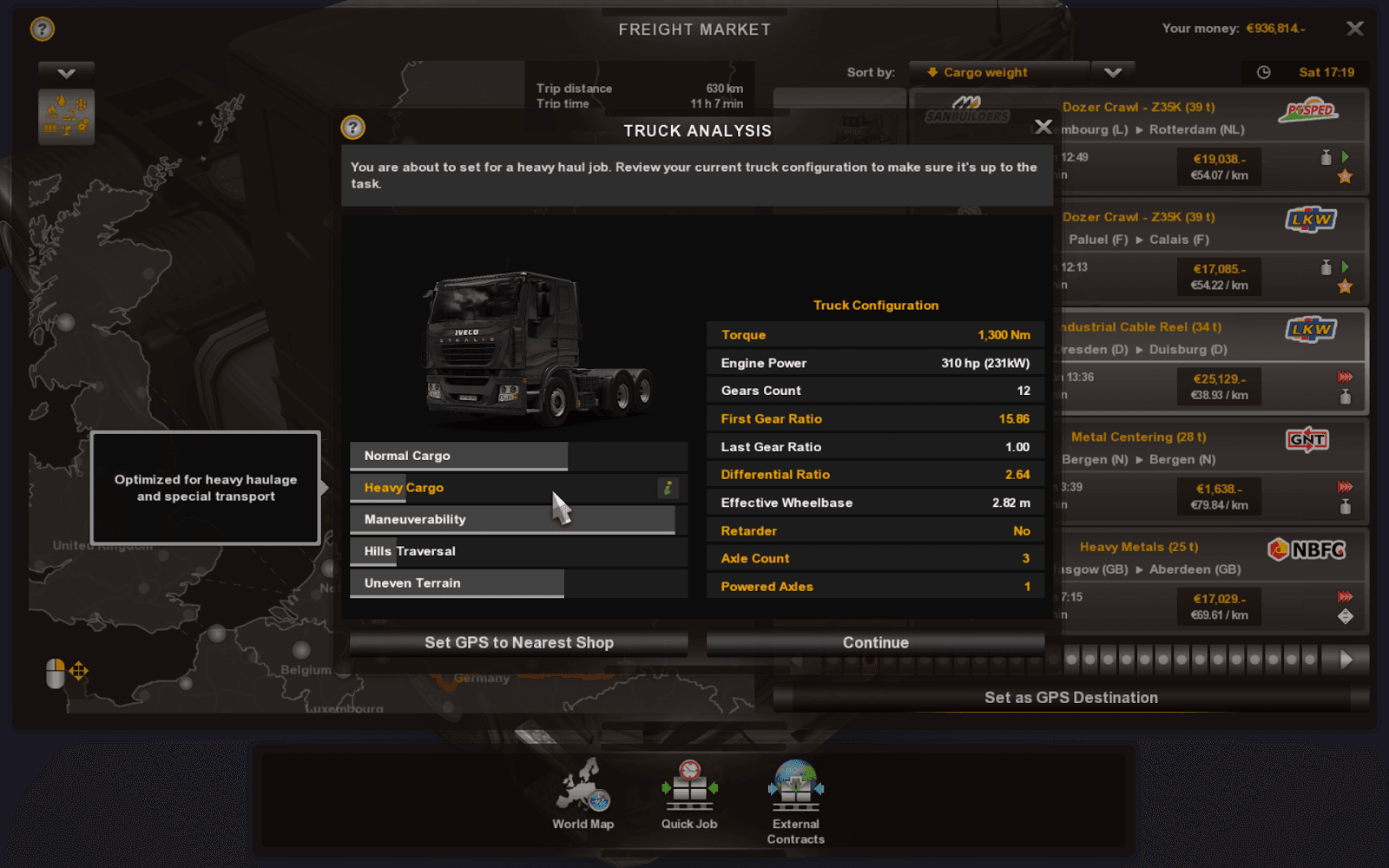
Freight Market interface
Expanding Your Business
Purchasing your first trailer opens the Cargo Market. You own both truck and trailer, giving you complete control over operations. The responsibility increases (you handle all repositioning and maintenance), but so does your income.
Each trailer type accepts specific cargo categories. You'll eventually need multiple trailers to maximize job availability. Start with a standard box trailer, it handles the widest variety of shipments.
Hiring Your First Driver
Recruitment agencies appear in major cities. Hiring drivers seems expensive initially because you pay their salaries and fuel costs. However, they generate passive income while you're making deliveries or offline.
When you hire employees, you'll manage their skill progression individually. Focus their training on Long Distance and ADR first, maximizing their earning potential. Messages appear on your GPS showing their completed deliveries and your earnings.
Warning
Drivers need trucks and garage slots. Budget for these expenses before hiring, or they'll sit idle costing you money.
Garage Expansion
You'll find garage lots in various cities. Purchase them strategically in different countries, creating a distribution network. Each garage starts with three slots but upgrades to five.
Maximize each location by:
- Upgrading to five slots immediately
- Hiring drivers for each slot
- Training drivers in complementary skills
- Purchasing diverse truck types
This approach creates multiple income streams across Europe. While you're eating at rest stops or sleeping, your drivers generate revenue.
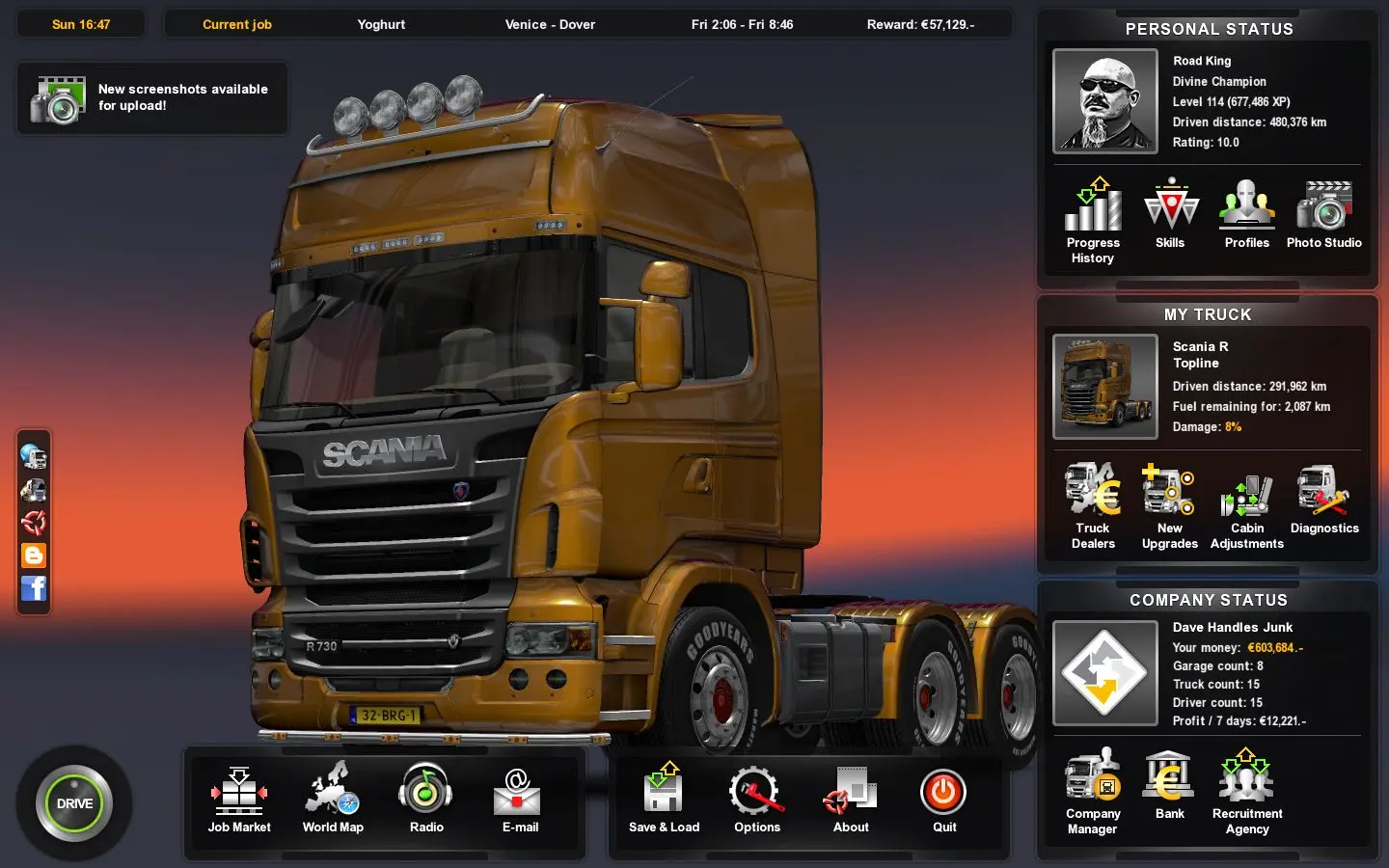
Garage upgrade menu
Maintenance Systems
Fuel management seems obvious, but new players often run empty. Gas stations appear frequently on highways. When your tank drops below 25%, start looking for the next station. Running out triggers a tow truck, costing you time and money.
Repair stations work similarly. Park in the designated area, and you'll see damage costs appear. In Quick Jobs, companies handle repairs and dock your pay. With your own trucks, you pay directly for all maintenance.
Vehicle Customization Options
Customization goes beyond aesthetics. You can:
- Change paint colors and company logos
- Upgrade engines for more power
- Install better transmissions
- Add performance parts
- Modify exterior accessories
Engine upgrades matter most. Better engines handle heavy cargo on steep grades, reducing delivery times and fuel consumption.
Building Your Trucking Empire
Your trucking empire is built one smart delivery at a time, so don’t feel pressured to rush through the journey. Enjoy the drives, discover new cities, and watch your company grow piece by piece until you’re running a full fleet across Europe. Thanks for reading this guide, and happy trucking out there.