
What's up, GAM3RS! There's a new card game making waves,and Dark Table CCG brings something fresh to the table. Built on the Somnia blockchain, this multiplayer tactical card game combines traditional CCG mechanics with on-chain collectibles and a unique political layer that transforms how you approach each match. Whether you're a veteran of Classic Card TCGs like Hearthstone or completely new to trading card games, Dark Table's blend of strategic depth and social dynamics creates an experience worth exploring.
Getting Started with Dark Table CCG
If you're ready to get started, simply head over to eitherEpic Games or Steamto download and install Dark Table CCG. The game is free to play, so you can start building your collection and testing strategies immediately. Once you've got it installed, you'll want to familiarize yourself with the core systems that make this game tick.
Gameplay Mechanics
Leaders
Everything in Dark Table revolves around your leader choice. These powerful characters dictate your entire playstyle, influence your deck construction, and ultimately determine whether you're celebrating victory or suffering a loss.
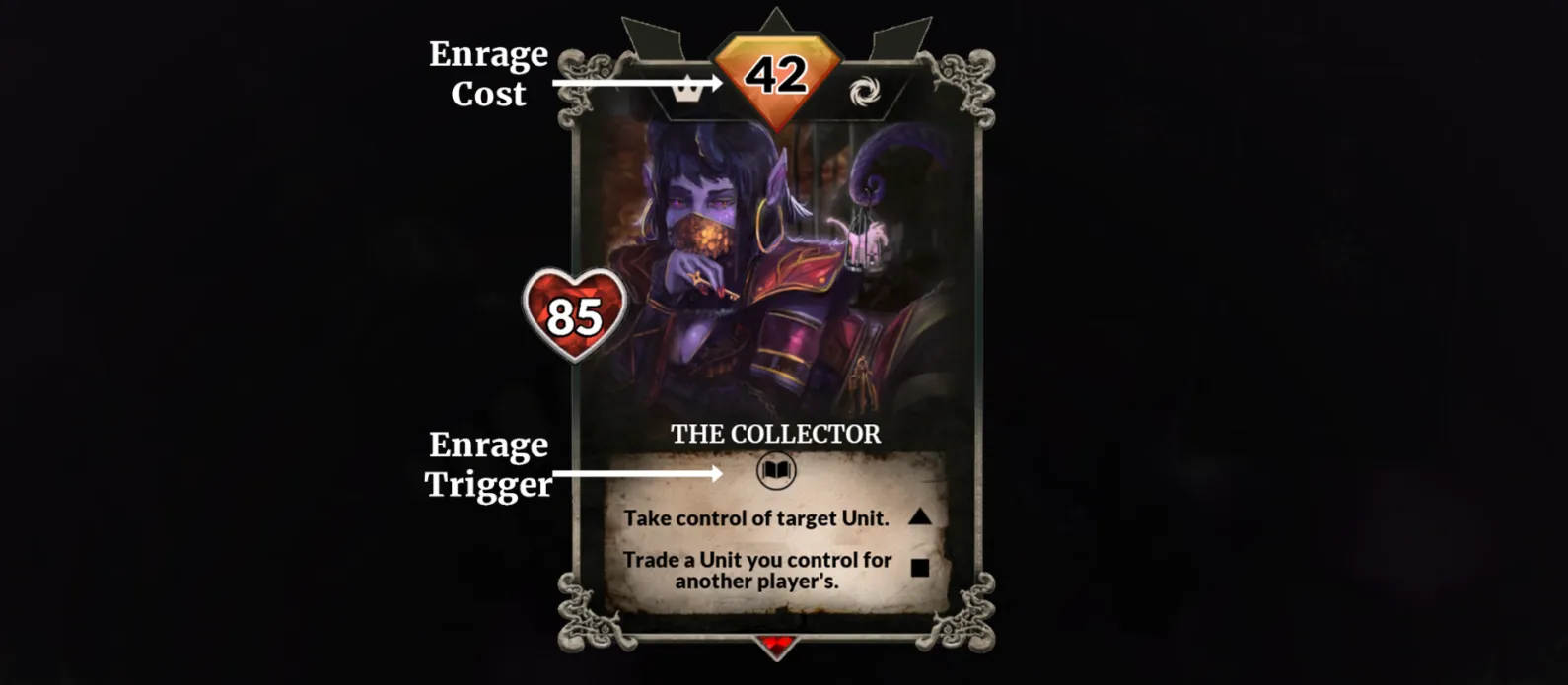
Dark Table CCG Leaders
Think of leaders like Hearthstone heroes on steroids, or Legends of Runeterra champions with their level-up mechanics, but with a twist that makes them far more impactful. Each leader comes with specific health totals and unique Enrage Abilities that can completely swing the momentum of a match when triggered.
Here's where it gets interesting. Leaders have different Enrage trigger types, and understanding these is crucial:
Knowledge Enrage leaders require you to accumulate unused knowledge points (think mana from other games) to reach a threshold. Any knowledge you don't spend during your battle phase flows into your knowledge pool, slowly building toward that explosive Enrage moment. These leaders reward patience and efficient resource management, making them perfect for control-oriented strategies. You'll need to carefully balance spending knowledge on immediate threats versus saving it for that game-changing ability.
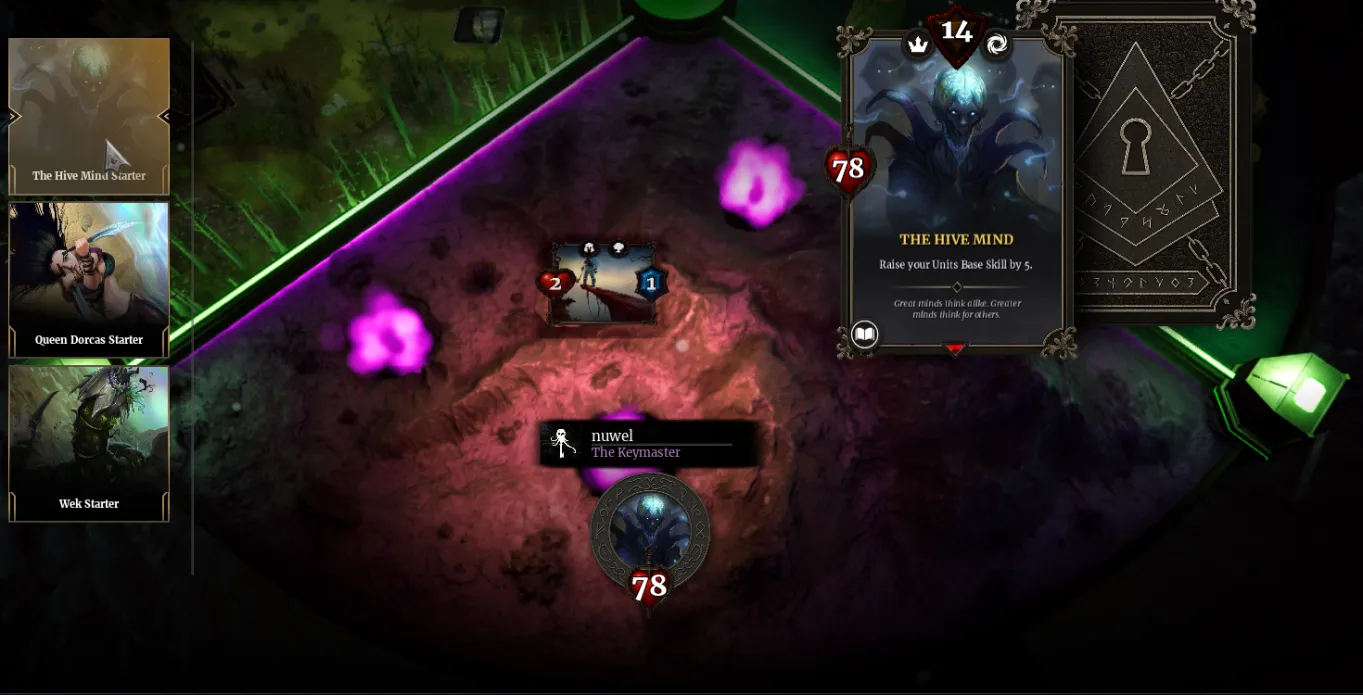
Dark Table CCG Starter Deck
Berserk Enrage leaders flip the script entirely. These warriors unlock their Enrage abilities when their health drops to a specific threshold. This creates fascinating mind games because your opponents might actually hesitate to damage you early, knowing they're feeding into your win condition. It's aggressive gameplay with a defensive twist, rewarding players who can walk the tightrope between staying alive and triggering their power spike.
Bloodshed Enrage leaders demand sacrifice. They count deaths in combat (your creatures, enemy creatures killed by your spells or traps) and unlock when enough blood has been spilled. This naturally pushes you toward aggressive, combat-heavy strategies where trading creatures becomes advantageous. Note that poison kills happening after your battle phase don't count, so you'll need to focus on direct combat encounters.
The health variance between leaders also matters significantly. Low-cost Enrage leaders typically have reduced health pools, creating a high-risk, high-reward scenario. You're racing to trigger your ability before getting overwhelmed. High-health leaders with expensive Enrages give you more breathing room but require longer setup.
From an archetype perspective, these trigger types naturally align with classic TCG strategies:
Game Flow and Phases
Dark Table operates on a two-phase system that creates unique tactical opportunities. Your deck contains a specific number of cards (details vary by format), and understanding how phases work is essential for competitive play.
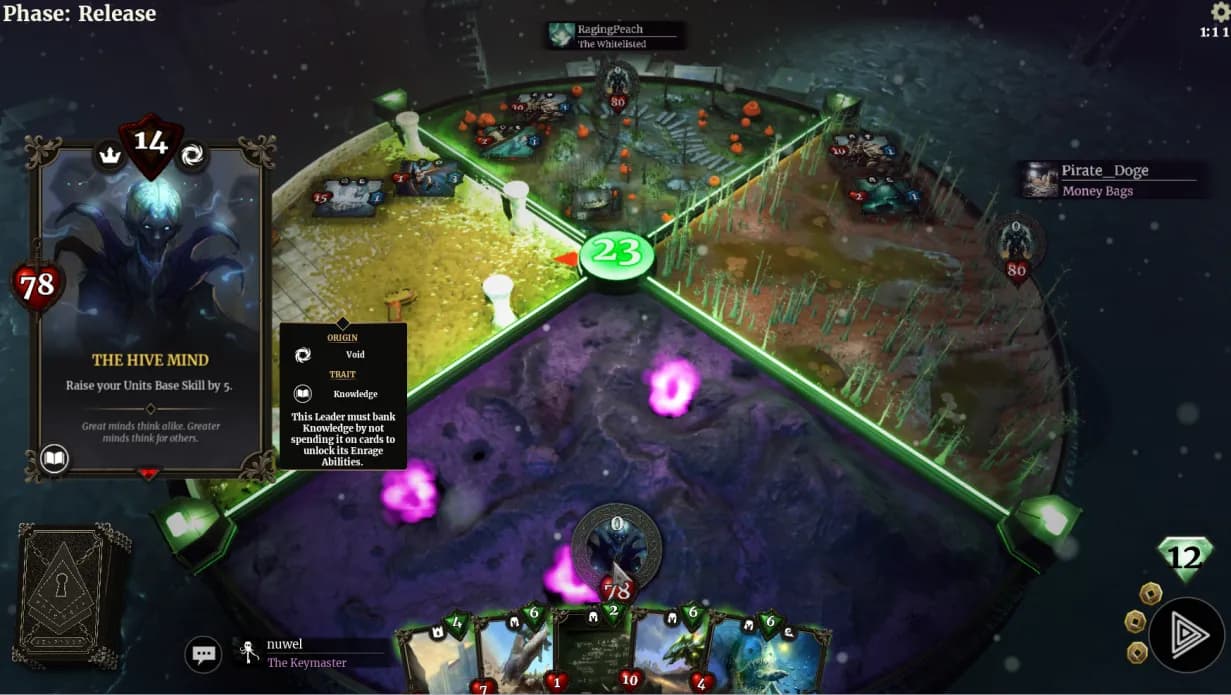
At the start of each turn, every player's knowledge pool replenishes to 10. Knowledge functions as your resource system for playing cards. During the Release Phase, all players act simultaneously. You can deploy units, walls, and traps to the board, but here's the catch: newly played cards remain hidden from your opponents, while anything from previous turns is visible.
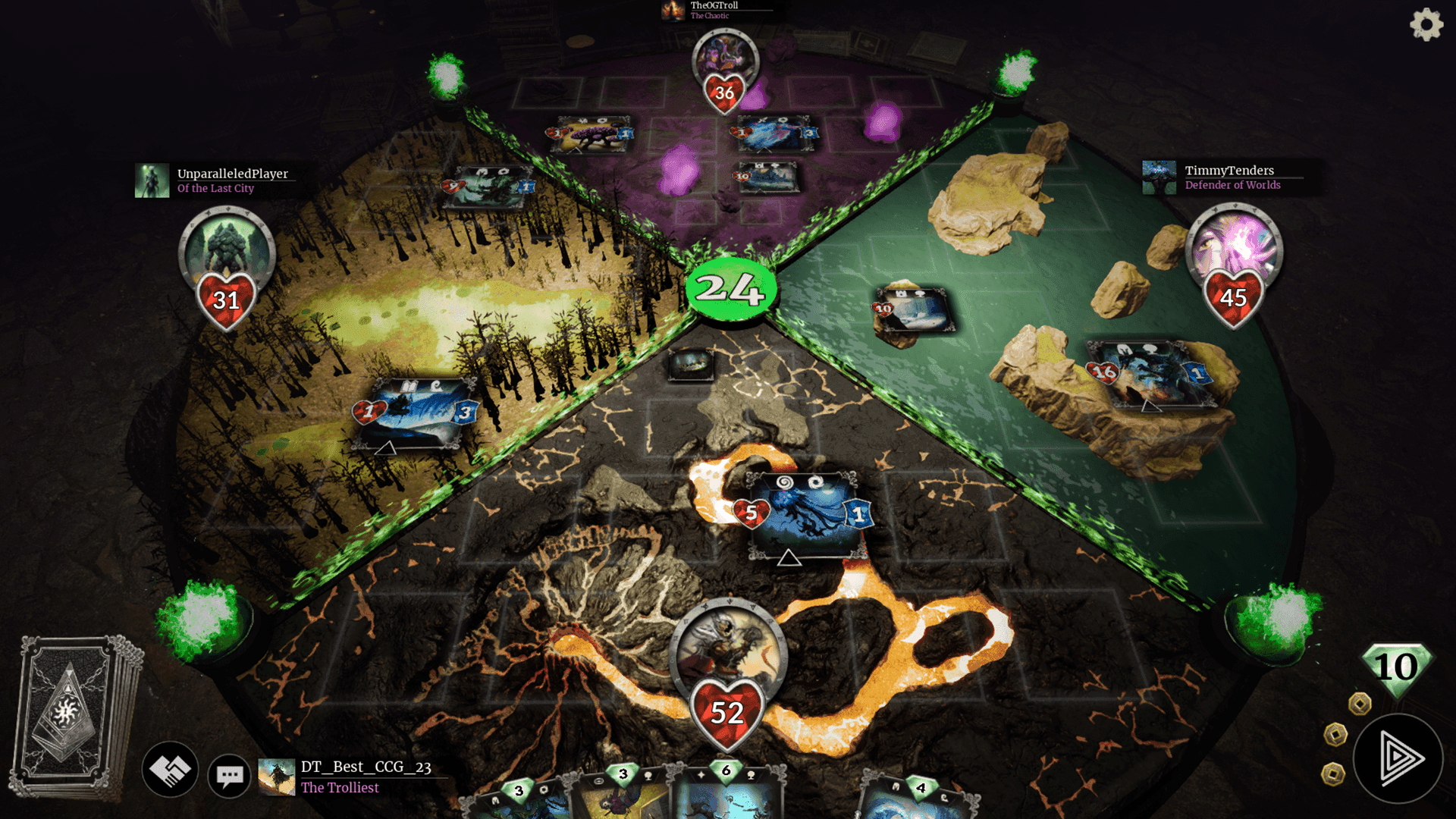
Dark Table CCG ombat
This simultaneous play creates a fascinating dynamic. You can't react to what your opponents are doing this turn because you're all making decisions at the same time. You're forced to anticipate threats, plan around board states, and commit to strategies without perfect information. It's poker meets chess.
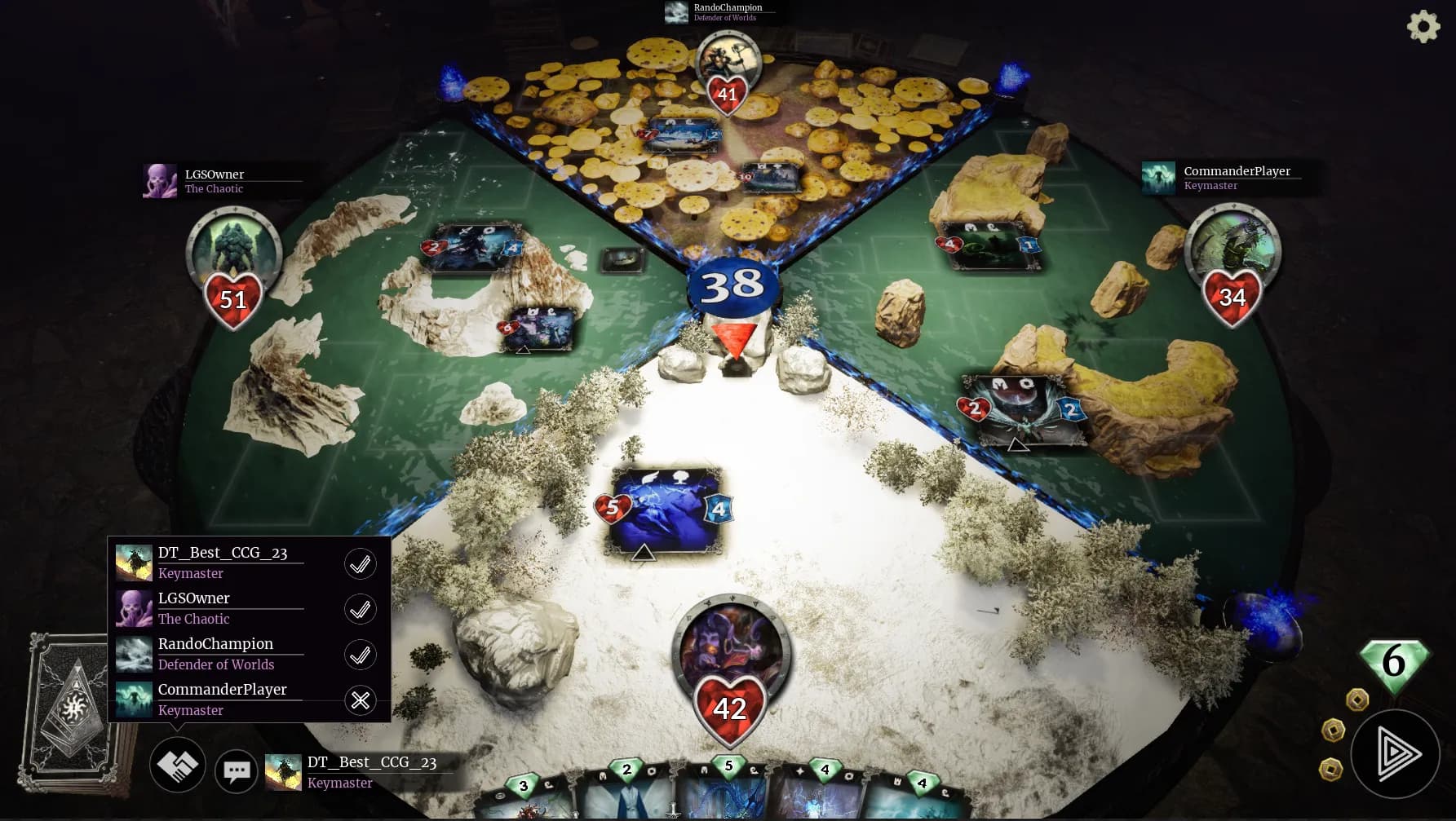
The second major phase is the Battle Phase, and this is where the clockwise rotation system works. One player receives the battle chip randomly at game start and attacks first. After their battle phase completes, the next player clockwise gets their turn, continuing around the table. Once everyone has battled, the chip moves clockwise to the next player, giving them first-attack priority next round.
Important
First-attack advantage is massive in Dark Table. The player with the battle chip can eliminate threats before they activate, set up lethal damage, or disrupt opponent strategies before they execute. Plan your turns around when you'll have priority.
During your battle phase, you can use units and spells to attack enemy units and leaders (following specific targeting rules we'll cover shortly). The knowledge you didn't spend during the release phase? It's gone. You can't bank it for later turns, which forces active decision-making every round.
Dark Table Units
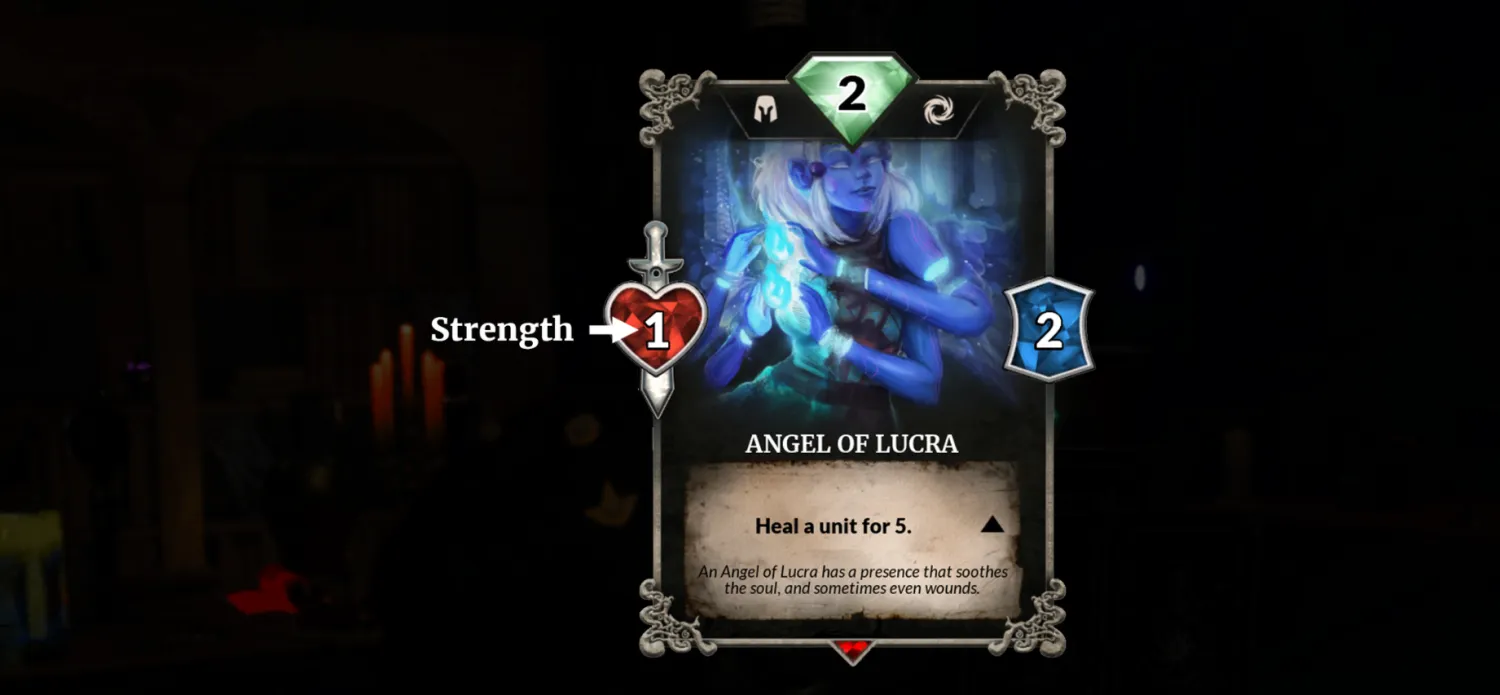
Units are your primary tools for controlling the board and dealing damage. Each unit comes with three critical stats: summon cost (knowledge required), strength, and skill.
Dark Table CCG Units
Strength serves double duty. It represents both the unit's current health and the damage it deals in combat. When a 2-strength unit battles a 5-strength unit, the stronger creature survives with 3 strength remaining (5 minus 2 equals 3). This means it now has 3 health and deals 3 damage in future combats. Any healing restores strength, increasing both survivability and damage output.
Skill is where Dark Table gets tactical. Units only take damage in battle if their opponent has equal or greater skill. This creates situations where a massive 10-strength creature with 1 skill can't even scratch a 2-strength unit with 2 skill. The smaller unit wins without taking damage.
Dark Table CCG Relase Phase
You have three skill tokens each round to modify this dynamic. These tokens add +1 skill to a unit for that turn, potentially turning losing battles into favorable trades. You can only use one token per unit per turn, and they reset after all battle phases complete. Managing these tokens separates good players from great ones.
Here's a practical example: You have a 4-strength, 2-skill unit. Your opponent plays a 6-strength, 3-skill wall. Normally, you can't damage it. But if you use a skill token, your unit becomes 4-strength, 3-skill for the turn. Now you trade evenly (both deal damage), and your 4-strength unit survives with 2 strength while their wall drops to 2 strength. Smart token usage wins games.
Special Unit Types
Certain units have traits that modify targeting rules:
Walls must be attacked first. They create a barrier protecting your other units and leader. Think of them as taunt minions from Hearthstone, but they're crucial in Dark Table because of the targeting priority system.
Heroes sit second in the targeting hierarchy. After walls are eliminated, heroes must be attacked before regular units or leaders. They typically feature low skill and high strength, making them damage sponges that draw attention.
Airborne units bypass walls entirely but still must attack heroes before other targets. They're excellent for applying pressure when your opponent turtles behind defensive lines.
Assassins are the ultimate priority breakers. They sneak past walls and heroes to strike units or leaders directly. Usually built with low strength and high skill, assassins excel at removing key threats or applying direct damage to enemy leaders.
Dark Table CCG
Keywords and Abilities
Like all great TCGs, Dark Table features units and spells with powerful abilities requiring specific triggers. Understanding these keywords elevates your gameplay significantly.
Focus grants a unit +1 skill when attacking, making it easier to damage higher-skill enemies.
Rally Cry buffs all your units with +1 strength during the battle phase, creating powerful swing turns when you have a wide board.
Frenzy lets a creature continue attacking after winning combat, potentially clearing multiple units in one battle phase. The effect ends if the creature dies or hits a wall/leader.
Confusion reduces an enemy unit's skill by 1 when battled, creating favorable matchups for your attackers.
Bind prevents a unit from attacking for one turn, excellent for neutralizing threats temporarily.
Warning
Don't underestimate keyword synergies. A deck built around Rally Cry effects can overwhelm opponents who don't respect the potential damage output.
Spells and Traps
Spells and traps add versatility to your strategy toolkit. Both can be played during the release phase, but they function differently.
Spells resolve immediately when played, performing their action during that phase. They're your direct answers to problems, whether that's removing units, healing your leader, or drawing cards.
Traps stick around after being played, sitting on the board as hidden threats until their trigger condition activates. Your opponents can see you have traps but won't know which ones until they spring. This creates incredible bluffing opportunities and forces opponents to play around multiple possibilities.
The simultaneous release phase makes trap placement particularly interesting. You can set up defensive traps anticipating aggression, or offensive traps to punish specific plays, all while your opponents are making their own decisions blind.
Diplomacy and War Tactics
Here's where Dark Table truly differentiates itself from traditional digital CCGs. The game includes an Alliance (or Betrayal) mechanic that brings tabletop politics into the digital space.
During matches, you can propose alliances with opponents, selecting both an ally and a shared target. If accepted, you're temporarily aligned against a common threat. The game doesn't force you to honor the alliance, but following through earns extra in-game currency.
This system creates fascinating dynamics. Maybe two players are neck-and-neck for the win, and you need both of them to focus the leader who's pulling ahead. Or perhaps you're behind and need to negotiate a temporary ceasefire while you build your board. The chat functionality lets you communicate, negotiate, and yes, even betray.
Smart players use alliances to:
- Coordinate attacks on dominant opponents
- Buy time when behind
- Secure resources for crucial turns
- Create chaos and misdirection
Building your Deck
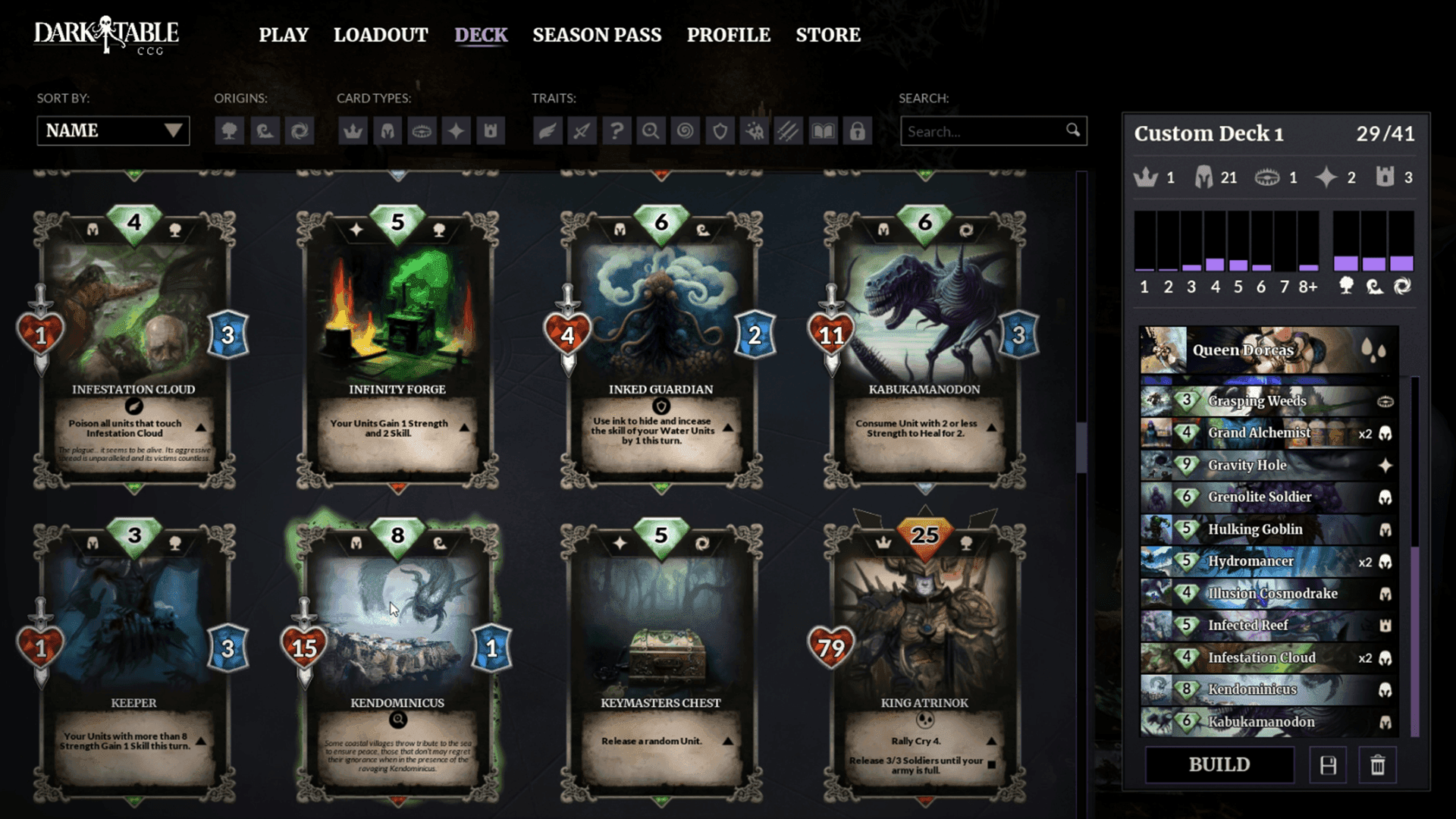
Deckbuilding stands out in Dark Table CCG because it puts theorycrafting front and center without the usual pack-opening grind. When you open the deckbuilder, you can immediately search the full card library, and every single card in the game is right there for you to browse and add. Pick your leader first, start slotting in units, spells, traps, whatever fits the synergy you're chasing, and when you're happy with the list, hit finalize. The game checks your collection, highlights anything you're missing, and lets you purchase those exact cards with in-game currency, no RNG involved.
Dark Table CCG Deck Builder
If buying singles feels too slow, there's a faster route: spend one Deck Token and the system instantly fills in the entire deck for you, ready to play. For the bigger commitment, Origin Keys are limited-edition drops that unlock 4-12 copies of every card tied to a specific Origin (Land, Water, or Void), and this includes all future sets too,basically a one-time buy that keeps you covered forever.
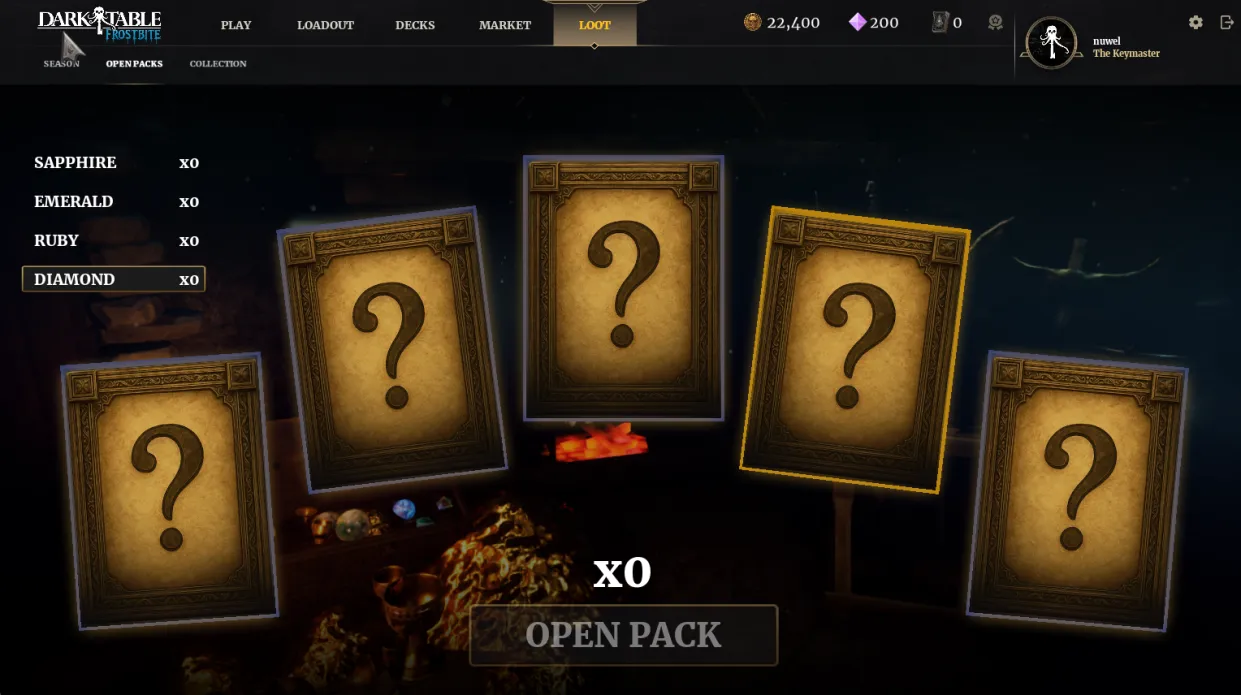
Dark Table CCG Pack Opening
Blockchain-wise, the game runs on Somnia Network, so most items are true on-chain collectibles you can buy, sell, or trade on a shared Cross-Collectible market that works seamlessly whether you're on Steam or Epic. If owning and trading cards outside the game appeals to you, it's all there. If you're just in it for the matches and deckbuilding, you can completely ignore that side, as everything functions normally without ever touching the web3 stuff.
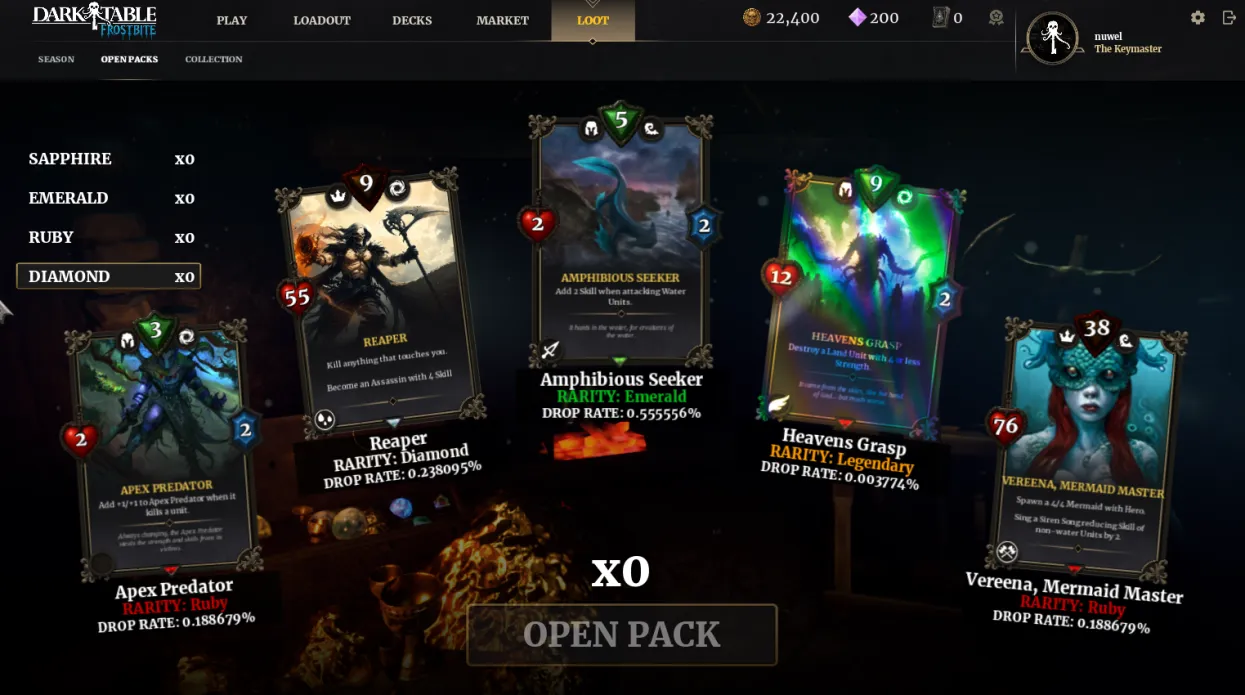
Dark Table CCG Pack Opening
Wrapping Up Dark Your Table Initiation
You've now got the foundation to start your Dark Table CCG journey with confidence. From understanding how leader Enrage abilities shape your entire strategy, to mastering the strength-skill combat system, to navigating the political waters of multiplayer matches, you're equipped with the knowledge to compete.
Remember that Dark Table CCG rewards both tactical thinking and social awareness. Your deck construction matters, but so does reading your opponents and timing your plays around the battle chip rotation. Start experimenting with different leader types to find your preferred playstyle, whether that's the patient control of Knowledge Enrage, the calculated aggression of Berserk, or the relentless pressure of Bloodshed.
The best way to improve is simply to play. Each match teaches you new interactions, reveals synergies you hadn't considered, and helps you understand the meta. Check out more Dark Table CCG content to stay updated on new sets and strategies, and don't forget to explore other exciting games when you need a break from the table.